Optimizing Low-Content Publishing: The Strategic Value of KDP Lined Journal 13 Interiors
The landscape of self-publishing has shifted dramatically over the last decade. What began as a niche avenue for authors unable to secure traditional contracts has evolved into a sophisticated ecosystem where entrepreneurs, marketers, and creatives build sustainable asset portfolios. Within this ecosystem, low-content and medium-content books remain a cornerstone strategy. However, the era of uploading generic, low-resolution templates is effectively over. Today’s successful publishers understand that quality infrastructure is just as important as cover design. This is where specific, high-fidelity assets like KDP Lined Journal 13 play a pivotal role in modern publishing workflows.
For professionals and creators navigating the Amazon KDP marketplace, understanding the technical and strategic nuances of interior files is no longer optional. It is the difference between a book that gets lost in the algorithm and one that garners positive reviews and repeat customers. KDP Lined Journal 13 represents more than just a set of lined pages; it exemplifies the current industry standard for precision, compliance, and user experience in digital print-on-demand.
The Evolution of Consumer Expectations in Print-on-Demand
To understand why specific interior specifications matter, we must first look at the broader consumer trends driving the stationery and journaling market. We are currently witnessing a significant "analog renaissance." In an age dominated by screen fatigue and digital notification overload, consumers are actively seeking tactile experiences that promote mindfulness, organization, and disconnection from technology. Journals, planners, and notebooks have transitioned from simple utility items to wellness tools and lifestyle accessories.
This shift has raised the bar for quality. Modern buyers are discerning; they read reviews meticulously and are quick to identify poor formatting, blurry lines, or incorrect margins. The market has matured from a novelty phase to a quality-first phase. When a creator utilizes KDP Lined Journal 13, they are responding directly to this demand for professionalism. The asset is engineered to meet the exacting standards of today’s consumers who expect print-on-demand products to rival traditionally published stationery in clarity and usability.
Furthermore, the rise of social media platforms like TikTok and Instagram has turned journaling into a visual performance. Users share spreads, setups, and writing routines online. A journal with crisp, high-definition lines photographs better and enhances the creator's brand aesthetic. By prioritizing high-quality interiors, publishers align their products with the visual nature of modern marketing and community building.
Technical Precision as a Competitive Advantage
In the low-content space, technical errors are the primary cause of rejection, poor customer feedback, and wasted advertising spend. Many aspiring publishers underestimate the rigidity of Amazon’s printing specifications. KDP Lined Journal 13 addresses these pain points through rigorous pre-validation. Understanding its specific features reveals why technical compliance is a business strategy rather than a mere checklist.
The Critical Importance of Trim Size and Bleed Settings
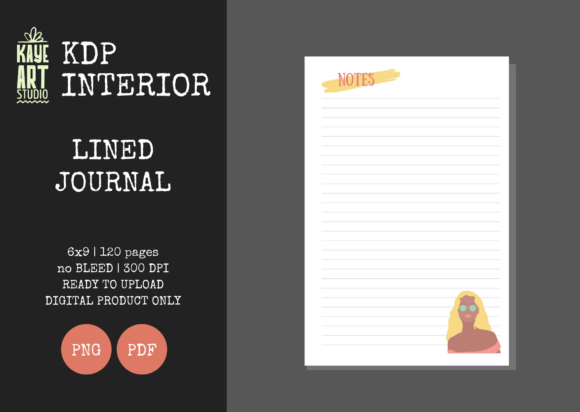
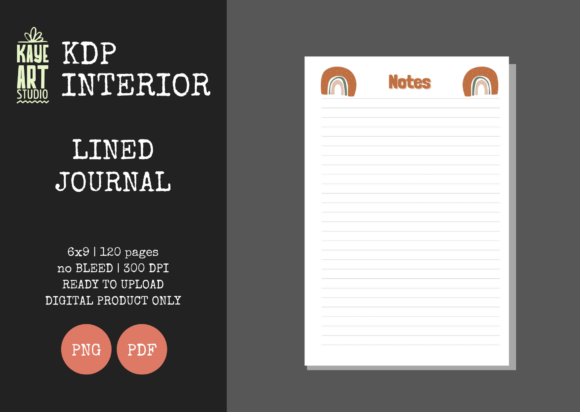
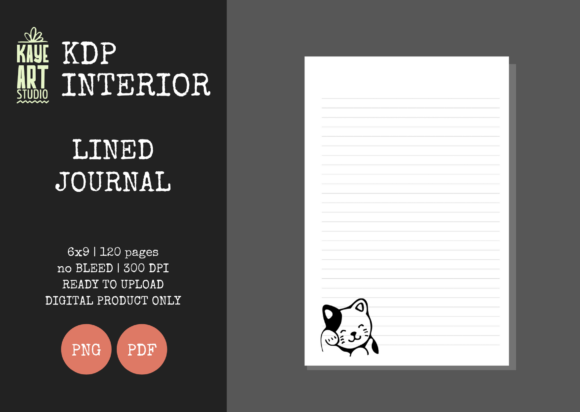
The 6×9 inch trim size remains the gold standard for trade journals and notebooks. It strikes an optimal balance between portability and writing surface area, making it versatile for students, professionals, and travelers. However, the true value lies in the bleed configuration. KDP Lined Journal 13 is configured with NO BLEED settings. This distinction is vital for workflow efficiency.
Misunderstanding bleed settings is the most common reason for file rejection during the KDP upload process. If a designer creates a cover or interior assuming bleed when none exists (or vice versa), the resulting product will have misaligned content or unintended white borders. By utilizing a pre-tested NO BLEED interior, publishers eliminate the guesswork. This ensures that the safe zone is respected and that the final physical product matches the digital proof exactly. For freelancers managing multiple titles, this reliability translates directly to time savings and reduced operational friction.
Resolution and File Integrity
Print quality is non-negotiable. Blurry lines or pixelated text destroy credibility instantly. KDP Lined Journal 13 is rendered at 300 DPI, the industry benchmark for sharp print reproduction. While some amateur templates circulate at 72 or 150 DPI, professional assets maintain high resolution to ensure that every line, header, and margin marker prints with absolute clarity.
The availability of both PNG and PDF file types offers flexibility for different stages of the publishing workflow. PDFs are generally preferred for direct upload due to their fixed layout and smaller file sizes, ensuring consistent rendering across devices. PNGs serve as valuable backups or source files for designers who may wish to composite additional elements or verify transparency layers before final conversion. This dual-format approach supports diverse creative workflows, from minimalist publishers to those integrating complex branding elements.
Streamlining Workflows for Entrepreneurs and Marketers
For entrepreneurs and marketers, time is the most scarce resource. The business model of low-content publishing relies on volume and velocity, but not at the expense of quality. Creating compliant interiors from scratch for every new title is an inefficient use of capital and labor. Assets like KDP Lined Journal 13 function as validated infrastructure, allowing creators to focus their energy on high-value activities such as keyword research, niche analysis, and cover design.
The fact that these files have been tested on KDP provides a layer of risk mitigation. In software development, we talk about "unit testing" to ensure code works before deployment. Similarly, using pre-tested interiors acts as quality assurance for your publishing pipeline. It reduces the anxiety associated with the upload process and minimizes the back-and-forth communication with KDP support regarding formatting errors. For agencies or freelancers managing client accounts, this reliability is a selling point; it guarantees deliverables that work the first time.
Moreover, the standardized 120-page count of KDP Lined Journal 13 aligns with economic sweet spots in printing costs and perceived value. It offers substantial utility without pushing the spine width into higher pricing tiers unnecessarily. This demonstrates how technical specifications intersect with profit margin optimization. Smart publishers choose page counts not arbitrarily, but based on manufacturing economics and consumer price sensitivity.
The Distinction Between Interior and Cover Strategy
A crucial aspect of leveraging KDP Lined Journal 13 is understanding what it is not. This listing is explicitly for the INTERIOR only. This separation of concerns is intentional and strategic. In the current marketplace, the cover is the primary conversion driver, while the interior dictates retention and review quality.
By sourcing a premium, standardized interior, creators free themselves to invest heavily in custom cover design. Generic interiors can be shared across niches, but covers must be hyper-specific to target audiences. A productivity journal for nurses requires vastly different visual signaling than a gratitude journal for teenagers, even if the internal lined structure is identical. Using a reliable interior foundation allows marketers to rapidly test different cover concepts and niches without reinventing the wheel each time.
This modular approach also future-proofs your catalog. As design trends evolve, you can update covers while maintaining the same trusted interior format that your customers already love. Conversely, if KDP updates its printing specifications, you can swap out the interior file across multiple titles while keeping your successful cover designs intact. This decoupling of assets is a hallmark of mature, scalable publishing operations.
Aligning with Broader Industry Developments
The relevance of high-quality, pre-formatted interiors extends beyond individual book sales. It reflects the professionalization of the entire self-publishing supply chain. We are seeing a move away from "get rich quick" mentalities toward sustainable brand building. Successful publishers are treating their KDP catalogs as legitimate product lines rather than lottery tickets.
This trend intersects with the growing importance of intellectual property and asset ownership. By investing in properly licensed, high-quality interiors like KDP Lined Journal 13, creators avoid the legal and reputational risks associated with using stolen or improperly sourced templates. Ethical publishing practices are becoming a differentiator as platforms crack down on duplicate content and copyright infringement. Using verified, original assets is a form of insurance against account suspension.
Additionally, the emphasis on 300 DPI and precise trim sizes mirrors the broader graphic design industry's return to craftsmanship. Just as web designers now obsess over accessibility and responsive layouts, print designers are obsessing over readability and tactile comfort. The spacing of lines, the weight of the stroke, and the margin ratios all contribute to the user experience. KDP Lined Journal 13 embodies this attention to detail, recognizing that a journal is ultimately a tool for thought, and tools must be well-made to be useful.
Practical Implementation for Modern Creators
Integrating KDP Lined Journal 13 into your workflow requires a mindset shift from creation to curation and assembly. Here is how forward-thinking publishers are maximizing this asset:
- Niche Validation First: Before applying the interior, validate that the 6×9 lined format suits your target audience. While versatile, some niches require dot grid or specialized prompts. Use this interior for confirmed lined-journal demand.
- Cover Synergy: Design your cover with the knowledge that the interior is NO BLEED. Ensure your cover spine calculation accounts for exactly 120 pages to prevent alignment issues.
- Quality Control Sampling: Even with tested files, always order a physical proof when launching a new brand or paper type. Verify that the 300 DPI lines render crisply on both cream and white paper options.
- Bundle Strategy: Consider creating series where the interior remains constant but covers vary seasonally or thematically. This builds brand recognition and encourages collection behavior among buyers.
- Marketing Transparency: Highlight the quality features in your book description. Mentioning "premium lined pages" or "optimized writing experience" signals to buyers that you have invested in quality, distinguishing your product from low-effort competitors.
Ultimately, KDP Lined Journal 13 serves as a foundational element in a professional publishing strategy. It bridges the gap between creative ambition and technical reality, enabling creators to produce work that meets modern standards of excellence. In a marketplace increasingly defined by quality over quantity, such precision is not merely helpful—it is essential for long-term success.