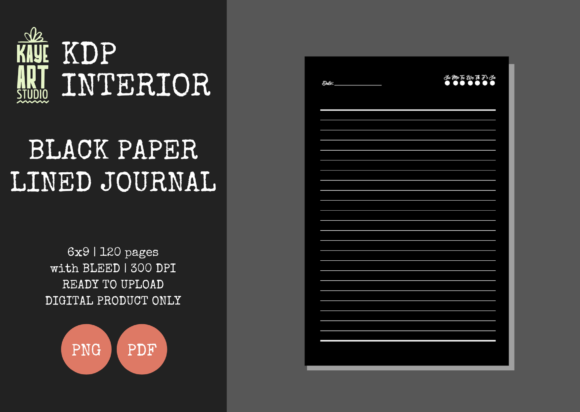
KDP Black Paper Lined Journal 2: Elevating Low Content Publishing with Premium Interiors
The landscape of self-publishing has shifted dramatically from simple novelty notebooks to sophisticated, niche-specific tools that serve distinct user needs. Within this evolution, the KDP Black Paper Lined Journal 2 represents a strategic pivot for creators focusing on quality over quantity. As the market for no and low content books matures, publishers are finding that success now hinges on offering specialized interiors that solve specific problems or cater to unique aesthetic preferences. This particular interior template is designed to bridge the gap between generic stationery and premium writing experiences, providing a foundation for a sustainable publishing business.
For entrepreneurs, marketers, and creatives managing a KDP portfolio, understanding the technical and psychological appeal of black paper interiors is essential. It is no longer enough to upload a standard white lined notebook and hope for organic discovery. Modern consumers, ranging from students to professionals, are actively seeking alternatives that reduce eye strain, enhance contrast for gel pens, or simply offer a more luxurious tactile experience. By integrating high-quality assets like the KDP Interiors Black Paper Lined Journal into your workflow, you align your products with current consumer behaviors that value intentionality and design excellence in analog tools.
The Shift Toward Specialized Analog Tools in a Digital Age
We exist in an era of digital saturation, yet the demand for physical journals continues to grow. This paradox is driven by a desire for disconnection and mindfulness. However, the modern journal user is discerning. They are not merely looking for blank pages; they are looking for an environment that facilitates their specific type of thinking or creativity. The standard white page can sometimes feel sterile or intimidating, whereas black paper offers a psychological cue that signals a different mode of engagement.
This shift mirrors broader trends in user interface design and lifestyle aesthetics. Just as "dark mode" has become a standard preference in software development to reduce visual fatigue and improve focus, dark-themed stationery has gained traction among writers, artists, and planners. The KDP Black Paper Lined Journal 2 capitalizes on this preference by translating digital comfort into a physical format. For publishers, this means moving beyond the "one-size-fits-all" mentality. It involves recognizing that a segment of your audience specifically requires a dark background to feel comfortable expressing themselves, whether they are drafting poetry, sketching with metallic markers, or maintaining a gratitude practice.
Meeting Evolving User Expectations for Quality
The barrier to entry for KDP publishing is low, but the barrier to profitability is rising due to increased competition. Users have become adept at identifying low-effort products through reviews and preview features. A pixelated line or a grayish-black background that looks washed out in print will result in immediate returns and negative feedback. This is where technical specifications matter as much as creative concept.
Professionalism in low content publishing is defined by adherence to industry standards. The KDP Black Paper Lined Journal 2 addresses this by providing files that are rigorously tested for Amazon’s printing requirements. When users encounter a crisp, consistent 300 DPI interior, it builds trust in your brand as a publisher. This attention to detail transforms a simple commodity into a perceived value product. For educators recommending journals to students or business owners creating branded merchandise, this reliability is non-negotiable. The expectation is that a purchased journal should function flawlessly, with lines that are visible but not distracting against the dark background.
Technical Precision and Workflow Efficiency for Publishers
For freelancers and business owners treating KDP as a serious revenue stream, time is the most valuable asset. Creating a flawless black paper interior from scratch involves significant trial and error regarding ink density, line opacity, and margin safety. Using pre-validated templates like the KDP Interiors Black Paper Lined Journal streamlines this process, allowing you to focus on cover design and marketing strategy rather than troubleshooting file formatting.
The technical specifications of this interior are tailored for seamless integration into the KDP ecosystem. Understanding these parameters is critical for avoiding rejection during the upload process:
- Trim Size: The 6×9 inch dimension remains the industry gold standard for trade paperbacks and journals. It offers a portable form factor that fits easily into bags and backpacks, making it ideal for commuters, travelers, and students.
- Page Count: At 120 pages, this journal hits the sweet spot for perceived value and spine width. It is substantial enough to feel like a real book but light enough to remain portable. This count also allows for adequate space for long-term projects without becoming unwieldy.
- Resolution: Files are provided at 300 DPI, ensuring that lines appear sharp and solid when printed. Lower resolution files often result in jagged edges or banding on dark backgrounds, which ruins the premium aesthetic.
- File Formats: Availability in both PNG and PDF offers flexibility. While PDF is generally preferred for multi-page documents to ensure consistency, having source options allows for customization if you possess the necessary editing software.
Critical Upload Considerations: The Bleed Setting
One of the most common points of failure for new and experienced publishers alike is mismanaging bleed settings. Because the KDP Black Paper Lined Journal 2 utilizes a full-page dark background, selecting the correct setting is mandatory. You must choose “BLEED” when uploading your manuscript to KDP. Failing to do so will result in a white border around the edge of your pages where the printer cannot reach, completely undermining the aesthetic intent of a black paper journal.
This listing provides interior files only. This distinction is vital for your workflow planning. You retain complete creative control over the cover, which is where your primary differentiation strategy should live. While the interior provides the functional utility, the cover communicates the niche. Whether you are targeting gothic literature enthusiasts, luxury planners, or tech professionals who prefer dark mode aesthetics, your cover must signal that the interior matches that specific vibe. The separation of interior and cover assets encourages a modular approach to publishing, enabling you to test multiple cover designs against a single, proven interior file.
Strategic Niche Application and Market Relevance
Understanding the product is only half the equation; knowing where it fits in the current market is what drives sales. The versatility of a black lined journal allows for application across diverse niches that standard white journals cannot effectively serve. Successful publishers use this interior as a base for varied product lines:
- Creative Writing and Poetry: Many poets and fiction writers find that black paper reduces the pressure of perfection. The visual weight of white text or metallic ink on a dark surface feels more artistic and less administrative. Marketing this interior to creative writing communities or NaNoWriMo participants taps into a passionate, recurring buyer base.
- Specialized Planning and Tracking: For habit trackers or fitness logs where color-coding is essential, black paper makes neon gel pens and pastel highlighters pop with incredible vibrancy. This creates a satisfying visual feedback loop that encourages continued use of the journal.
- Sensory and Accessibility Needs: Some individuals with dyslexia or visual processing sensitivities find high-contrast white paper difficult to read. A muted black background with subtle lines can provide a more accessible writing surface. Positioning your product as sensory-friendly opens up an underserved demographic.
- Premium Gifting and Corporate Swag: Businesses looking for distinctive gifts often avoid standard notebooks because they feel cheap. A black paper journal conveys sophistication and thoughtfulness, making it suitable for executive gifts, conference swag, or client appreciation packages.
Navigating the Future of Low Content Publishing
As we look forward, the KDP marketplace will likely continue to reward specificity and quality. The era of mass-uploading generic content is fading. Publishers who treat their journals as curated products rather than disposable commodities will build resilient businesses. The KDP Black Paper Lined Journal 2 serves as a tool for this transition. It removes the technical friction of creating complex interiors, allowing you to invest your energy in market research, keyword optimization, and community building.
Furthermore, the rise of social media platforms like TikTok and Instagram has made the visual appeal of stationery a primary driver of discovery. Black paper journals are inherently photogenic. They perform exceptionally well in video content showcasing pen tests, handwriting tutorials, or desk setups. By utilizing a high-quality 300 DPI interior, you ensure that the product seen in marketing materials matches the product received by the customer. This alignment between digital promise and physical reality is the cornerstone of E-E-A-T (Experience, Expertise, Authoritativeness, and Trustworthiness) in e-commerce.
Ultimately, incorporating specialized interiors into your catalog is about respecting the end user's experience. It acknowledges that writing is a multisensory activity and that the medium influences the message. Whether you are a seasoned publisher optimizing your backlist or a new entrepreneur entering the space, leveraging professionally prepared assets ensures that your business is built on a foundation of quality. The KDP Black Paper Lined Journal 2 is not just a file download; it is a component of a broader strategy to meet modern consumers where they are, providing them with tools that inspire, function beautifully, and stand the test of daily use.