Streamlining Low-Content Publishing with KDP Lined Journal 15 Interiors
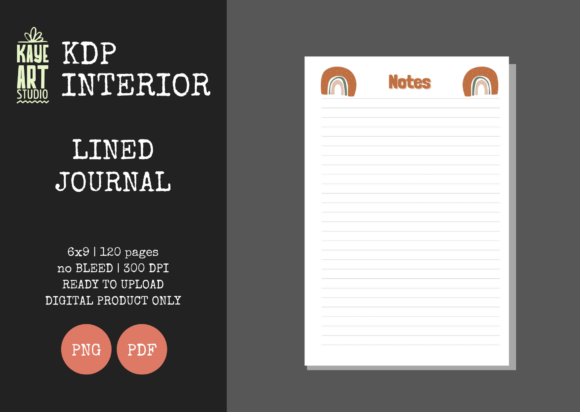
For self-publishers navigating the competitive landscape of Amazon KDP, efficiency is often just as important as creativity. The KDP Lined Journal 15 interior template represents a strategic asset for creators who want to maintain high publication volume without sacrificing quality or risking account flags due to formatting errors. This specific 6x9 inch, 120-page lined journal interior is engineered to meet the precise technical requirements of print-on-demand platforms, allowing authors to focus their energy on cover design and niche marketing rather than wrestling with margin settings and bleed configurations.
Technical Precision and Print Quality Standards
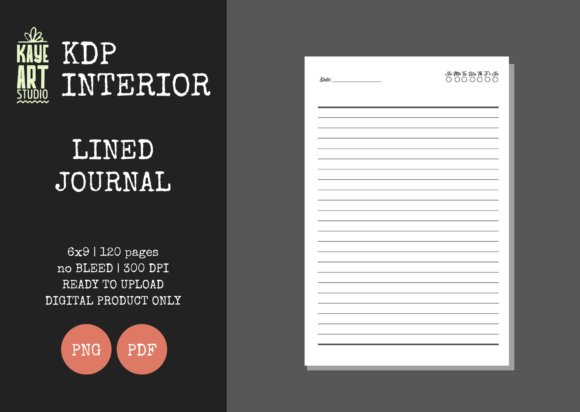
The foundation of any successful low-content book lies in its adherence to printing specifications. A common pitfall for new publishers is submitting files that trigger automated rejection emails or result in poor physical products. The KDP Lined Journal 15 eliminates this friction by adhering to strict industry standards. The file is pre-configured at 300 DPI (dots per inch), which is the non-negotiable benchmark for crisp, professional printing. While some templates circulate at lower resolutions to save file size, 300 DPI ensures that the ruling lines appear sharp and consistent, avoiding the pixelation or blurriness that leads to negative customer reviews.
Furthermore, this template utilizes a NO BLEED setting. Understanding bleed is critical for KDP interiors. Because the lines on this journal do not extend to the very edge of the paper, no bleed is required. This simplifies the upload process significantly. Publishers can select the "No Bleed" option in the KDP dashboard with confidence, knowing the safe zones and margins have already been calculated for a 6x9 trim size. The 120-page count is equally deliberate; it hits a sweet spot for spine width calculation while keeping production costs low enough to allow for competitive pricing and healthy royalty margins.
File Format Versatility: PNG vs. PDF Workflows
Modern publishing workflows vary significantly depending on the software stack a creator uses. Providing both PNG and PDF formats for the KDP Lined Journal 15 accommodates these diverse needs. The PDF version is typically the go-to for direct uploads. It preserves vector-like quality for text and lines, ensuring the smallest possible file size and fastest processing time during the KDP preview stage. For authors using tools like Canva, Affinity Publisher, or Photoshop to add custom elements—such as motivational quotes, headers, or branding—the high-resolution PNG files offer flexibility.
This dual-format approach supports hybrid publishing strategies. For example, a creator might use the standard PDF for a generic composition notebook but utilize the PNG pages to build a specialized guided journal where unique content is layered over the standard ruling. Having tested, ready-for-upload files means you are not starting from scratch. You are building upon a verified foundation. This reduces the "time-to-market" metric, allowing you to capitalize on seasonal trends or emerging niches faster than competitors who must format their interiors manually.
The Strategic Role of the 6x9 Trim Size
While KDP offers numerous trim sizes, the 6x9 inch format remains the industry standard for trade paperbacks and journals for several practical reasons. When utilizing the KDP Lined Journal 15, you are leveraging the most versatile canvas available. This size fits comfortably in standard bags, backpacks, and desk organizers, making it the preferred choice for students, professionals, and travelers. From a manufacturing perspective, 6x9 books often have more reliable availability and shipping options compared to obscure dimensions.
Market research consistently shows that customers perceive 6x9 journals as substantial yet portable. Larger formats like 8.5x11 can feel cumbersome for daily carry, while smaller sizes may lack sufficient writing space. By standardizing your catalog around this trim size, you also streamline your cover design process. Once you establish a successful cover template for the KDP Lined Journal 15, adapting it for future releases becomes a matter of changing artwork rather than recalculating spine widths and trim allowances.
Differentiating Through Cover Design
It is vital to understand that this listing provides the interior only. This distinction is actually a benefit for serious publishers. In the saturated low-content market, the interior is merely the utility; the cover is the salesperson. Relying on pre-made covers often results in duplicate listings and brand dilution. By sourcing a high-quality, compliant interior like the KDP Lined Journal 15 and creating your own covers, you retain full intellectual property rights and brand uniqueness.
This separation of assets encourages better business practices. You can test multiple cover designs against the same proven interior. If a particular aesthetic fails to convert, you haven't wasted time reformatting 120 pages of lining. You simply swap the cover file. This modular approach aligns with modern e-commerce testing methodologies. Whether you are targeting back-to-school demographics, corporate gifting, or personal wellness niches, the interior remains constant while your exterior branding adapts to specific audience psychographics.
Optimizing User Experience and Writeability
Ultimately, the end-user cares less about your workflow and more about the functionality of the journal. The line spacing and opacity in the KDP Lined Journal 15 are calibrated for actual writing instruments. Lines that are too dark can be distracting and make handwriting look messy; lines that are too faint disappear under certain lighting or when scanned. This template strikes a balance that enhances the writing experience. The 120-page length also prevents the "intimidation factor" associated with thicker journals, encouraging users to fill the book and potentially return for another purchase.
Consistency is another hallmark of user satisfaction. When customers buy multiple journals from your brand, they expect identical internals. Using a standardized, tested file ensures that Page 1 always aligns perfectly with Page 120, and that margins remain uniform throughout. This reliability builds trust. In an era where AI-generated content and rushed uploads have flooded the marketplace, demonstrating attention to technical detail through a flawless interior signals professionalism and respect for the customer's purchase.
Integrating Ready-Made Interiors into Scaling Strategies
For publishers looking to scale, the KDP Lined Journal 15 serves as a foundational SKU. Successful KDP businesses rarely rely on a single product type. They build ecosystems. A lined journal interior can be repurposed or bundled conceptually with other products. For instance, if you sell digital planners or printable worksheets, offering a matching physical journal creates a tangible touchpoint for your digital audience. The 6x9 form factor bridges the gap between digital planning and analog reflection.
Moreover, having a library of verified interiors reduces cognitive load. Instead of questioning whether your margins are correct for every new release, you know the KDP Lined Journal 15 has been tested and approved. This mental freedom allows you to dedicate more resources to keyword research, advertising optimization, and customer engagement. In the economics of self-publishing, time saved on technical compliance is time invested in revenue generation. By treating your interior files as stable infrastructure rather than variable creative projects, you create a sustainable, scalable publishing operation that can withstand platform updates and market shifts.