Truck Shift Log Book: Strategic Compliance and Operational Efficiency for KDP Publishers
In the competitive landscape of low-content publishing, success is rarely defined by volume alone but rather by the precision with which a product solves a specific regulatory or operational problem. The Truck Shift Log Book represents one such high-utility niche where accuracy directly correlates to sales velocity and long-term asset value. For publishers targeting the transportation sector, this is not merely a notebook; it is a compliance tool that drivers and fleet managers rely upon to meet Department of Transportation (DOT) regulations and maintain internal operational standards. Understanding the strategic implications of file specifications—specifically bleed settings, resolution, and size variations—is essential for creating a product that stands out in a saturated marketplace.
The Strategic Value of Technical Precision in Log Books
When developing a Truck Shift Log Book for Amazon KDP, technical specifications are functional features, not just backend requirements. A log book with poor margins or low-resolution printing fails its primary user: a professional driver who needs legible, durable records during roadside inspections. The inclusion of 300 DPI high-quality interiors is a non-negotiable standard. While digital screens may display 72 or 96 DPI adequately, print production demands higher density to ensure crisp lines and readable text at small point sizes. Blurry grid lines or faded headers suggest unprofessionalism, leading to negative reviews that permanently damage the listing’s conversion rate.
Furthermore, the decision to include an Intro Page transforms a generic template into a branded user experience. Strategically, this page serves multiple purposes. It provides space for driver and vehicle identification, establishes the log book's intended use, and offers instructions that reduce user error. From a publishing perspective, the intro page acts as a buffer zone for binding shifts and adds perceived value. It signals to the buyer that the creator has considered the practical workflow of the end-user, distinguishing the product from automated, low-effort competitors.
Navigating Size Variations and Bleed Settings
Market research indicates that truck drivers have distinct preferences regarding form factors, making the availability of multiple sizes a significant competitive advantage. Offering both 6x9 inches and 8.5x11 inches addresses two different use cases within the same niche. The 6x9 format is optimized for portability, fitting easily into glove compartments, shirt pockets, or clipboards used during quick stops. Conversely, the 8.5x11 format caters to fleet managers, owner-operators performing weekly audits, or drivers who prefer larger writing spaces for detailed notes and calculations.
Publishers must approach interior bleed with deliberate intent. In the context of a Truck Shift Log Book, bleed refers to content extending beyond the trim edge. This is critical when designing full-page grids, shaded header bars, or decorative borders. Without proper bleed configuration (typically 0.125 inches on all sides), trimming variances during manufacturing can result in unsightly white slivers along the edges. However, bleed also impacts safe zones. Text and essential data entry fields must remain well within the safety margin to prevent being trimmed off. A "KDP Tested" PDF implies that these margins have been verified against current Amazon guidelines, mitigating the risk of rejection or post-publication quality issues.
Operational Utility and User Experience Design
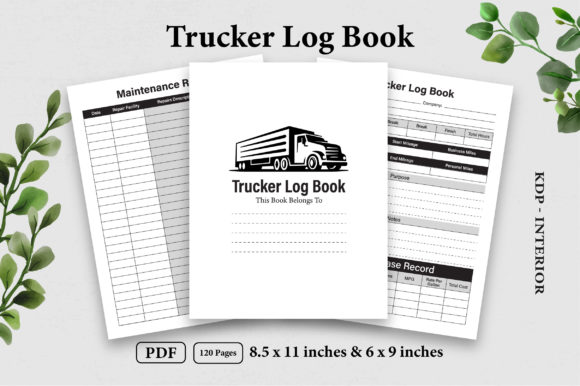
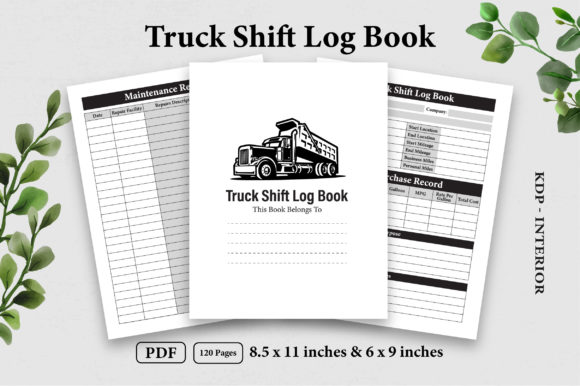
The interior layout of a Truck Shift Log Book should be dictated by real-world application rather than aesthetic preference. Strategic planning involves analyzing how drivers actually record Hours of Service (HOS). Effective layouts prioritize clarity over decoration. Columns for date, total miles, driving hours, on-duty hours, sleeper berth time, and off-duty time must be aligned logically. Adding extraneous graphics or complex designs often reduces the usable writing area, frustrating users who need to maximize every page.
A 120-page count strikes an optimal balance between longevity and portability. This volume typically covers three to four months of daily logging, aligning with common audit cycles and retention requirements. Thinner books require frequent replacement, increasing cost and friction for the user, while thicker volumes become unwieldy and expensive to produce. By standardizing at 120 pages, publishers offer a predictable lifecycle that encourages repeat purchases. This consistency aids in building a loyal customer base that trusts the brand for their recurring compliance needs.
Risk Mitigation Through Intentional Publishing
Relying on pre-made templates without understanding the underlying regulatory context poses significant risks. If a Truck Shift Log Book contains outdated columns or omits mandatory tracking fields, it becomes functionally obsolete regardless of its visual appeal. Publishers must verify that their interior layouts reflect current FMCSA (Federal Motor Carrier Safety Administration) standards. Even minor discrepancies can lead to returns and reputational harm. The phrase "Ready To Upload" should only apply after rigorous validation of content accuracy, not just file formatting.
Additionally, there is a strategic risk in ignoring metadata alignment. The physical attributes of the book (size, page count, bleed) must match the product description and backend keywords exactly. Discrepancies between what is promised in the listing and what arrives in the mail are primary drivers of negative feedback. Ensuring that the KDP Tested PDF matches the selected trim size and bleed settings in the upload dashboard is a fundamental quality control step. This alignment protects the publisher’s account health and ensures the algorithm correctly categorizes the book for relevant search queries.
Positioning for Long-Term Asset Performance
Treating a Truck Shift Log Book as a static product limits its potential. Strategic publishers view each title as part of a broader ecosystem serving the transportation industry. High-quality interiors with consistent branding across size variations create recognition. When a driver finishes a 6x9 log book and seeks a replacement, they are more likely to repurchase if the previous experience was seamless. Including an intro page with contact information or a QR code linking to other resources can further integrate the physical product into a digital strategy, opening avenues for direct marketing or community building outside the Amazon platform.
Decision-making in this niche should also consider seasonal demand and regulatory updates. Planning releases ahead of new fiscal quarters or anticipated regulation changes allows publishers to capture early-mover advantages. Updating interiors to reflect subtle changes in reporting requirements demonstrates expertise and keeps listings fresh. This proactive approach contrasts sharply with the reactive nature of bulk uploaders, positioning the thoughtful publisher as a reliable partner in the driver’s professional life.
Evaluating Readiness and Quality Assurance
Before launching, publishers should conduct a comprehensive audit of their Truck Shift Log Book files. This goes beyond checking pixel dimensions. It involves reviewing the user flow from the intro page through the final log entry. Are the binding margins sufficient for the page count? Is the paper opacity appropriate for the intended writing instruments? Does the cover design clearly communicate the interior specifications? These details influence purchasing decisions at the point of sale and satisfaction upon delivery.
The designation of 300 DPI and Interior With Bleed serves as a quality signal to discerning buyers who understand print standards. Highlighting these specifications in the product description helps filter for serious customers and sets accurate expectations. However, these claims must be substantiated by the actual file. Utilizing proof copies or digital previewers to validate line weights, contrast, and margin safety is an investment that prevents costly reprints and lost ranking momentum. In a market driven by utility, trust is the ultimate currency, and trust is built through consistent, verifiable quality.
Strategic Integration Into Business Operations
For entrepreneurs and small business owners in the KDP space, the Truck Shift Log Book serves as a case study in niche specialization. Success requires moving beyond generic content creation toward solving verified problems with professional-grade tools. The combination of technical excellence (300 DPI, tested PDFs), user-centric design (intro pages, appropriate sizing), and market awareness (regulatory compliance, practical page counts) creates a defensible position. Each element reinforces the others, creating a product that is difficult for low-effort competitors to replicate effectively.
Ultimately, the goal is to produce assets that generate sustainable revenue through genuine utility. By focusing on the intersection of regulatory necessity and superior production values, publishers can build a portfolio that withstands market fluctuations. The Truck Shift Log Book is not just a commodity; it is a testament to the publisher’s commitment to quality and understanding of their audience’s professional reality. Approaching this product with strategic intent ensures that every page, every pixel, and every specification contributes to long-term business objectives rather than short-term gains.