Streamlining KDP Production: The Strategic Value of Lined Paper Journal for KDP 1
The landscape of self-publishing has evolved significantly over the last decade, shifting from a niche hobbyist pursuit to a sophisticated segment of the digital creator economy. Within this ecosystem, Amazon’s Kindle Direct Publishing (KDP) platform remains a dominant force, particularly for entrepreneurs leveraging low-content and no-content publishing models. However, as market saturation increases, the margin for error decreases. Success is no longer guaranteed by simply uploading a generic template; it now requires precision, technical compliance, and an understanding of consumer psychology. This is where specialized assets like the Lined Paper Journal for KDP 1 become critical components of a sustainable business strategy rather than mere commodities.
For professionals, marketers, and freelancers operating in this space, the interior file is the foundation of product quality. While covers attract the initial click, the interior dictates customer satisfaction, review ratings, and long-term brand viability. Understanding the specific utility and market positioning of pre-formatted interiors like the Black Paper Lined Journal is essential for creators looking to optimize their workflows and meet modern consumer expectations without sacrificing production speed.
Redefining Efficiency in Low-Content Publishing
The term "low-content" is often misunderstood as "low-effort." In reality, successful low-content publishing is a high-volume, logistics-driven business model that demands rigorous attention to detail. The Lined Paper Journal for KDP 1 represents a solution to one of the most persistent friction points in this workflow: technical formatting. Creating a 120-page interior from scratch involves managing margins, gutter space, bleed settings, and resolution standards. For a creator managing a portfolio of hundreds of SKUs, this repetitive task is a significant bottleneck.
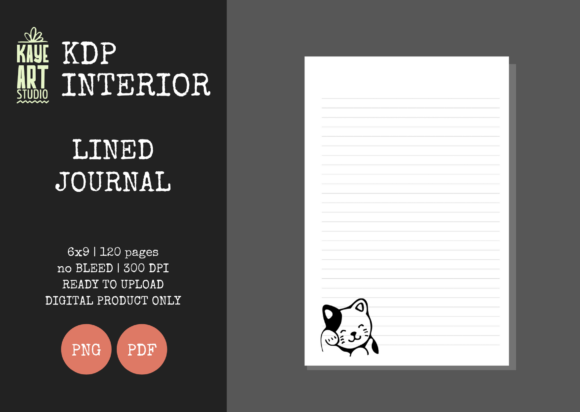
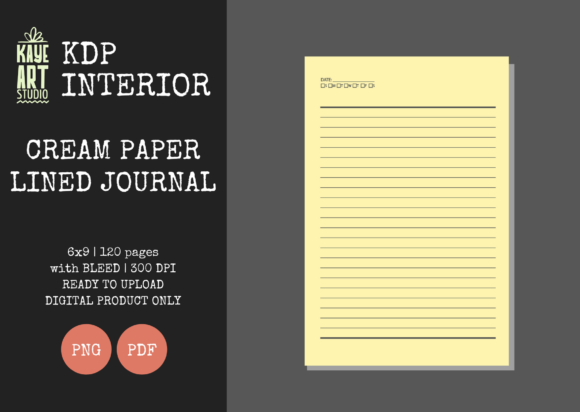
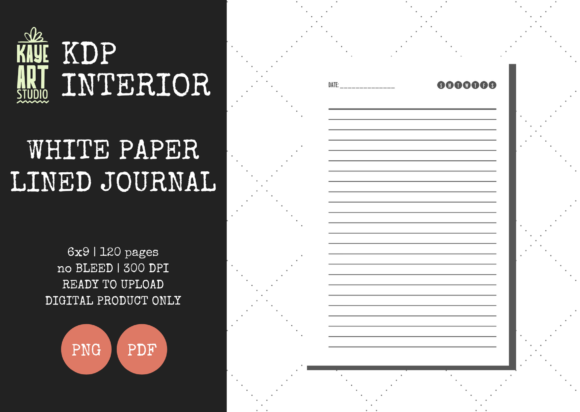
By utilizing a pre-tested asset with specific parameters—6x9 inch trim size, no bleed settings, and 300 DPI resolution—publishers can bypass the technical learning curve and focus on market research and niche targeting. This shift mirrors broader trends in the gig economy and digital entrepreneurship, where outsourcing or automating foundational tasks allows creators to allocate cognitive resources toward higher-value activities like keyword optimization, advertising strategy, and audience engagement. The value proposition here is not just the file itself, but the time equity it restores to the business owner.
Technical Precision as a Competitive Advantage
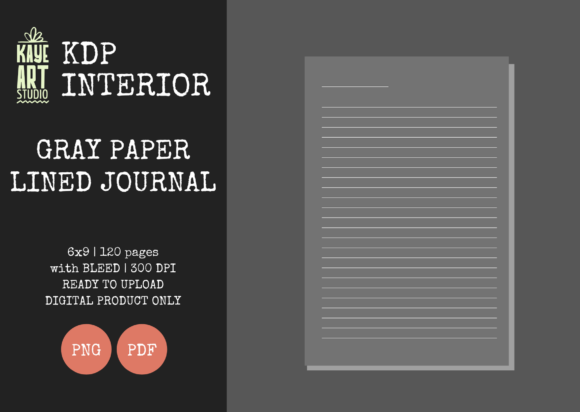
In the current KDP environment, technical rejection is a costly delay. Amazon’s automated review systems have become increasingly stringent regarding print quality and file specifications. A common pitfall for new publishers is submitting files with incorrect bleed settings or insufficient resolution, leading to blurry prints or rejected uploads. The specification of 300 DPI for this lined journal interior is non-negotiable for professional quality. While screen viewing may tolerate lower resolutions, physical printing demands high fidelity to ensure crisp lines and deep blacks, especially when dealing with black paper variants.
Furthermore, the distinction between bleed and no-bleed formats is crucial. The Lined Paper Journal for KDP 1 is configured for no bleed, meaning all content sits safely within the margins. This is the standard for traditional journals and notebooks where text should not extend to the edge of the page. Misunderstanding this setting is a frequent cause of publishing errors. By providing a file that has already been tested on KDP, the asset eliminates the guesswork, ensuring that the 120 pages align perfectly with Amazon’s manufacturing specifications. This reliability transforms a potential technical headache into a seamless upload process.
Market Trends and Consumer Preferences
Why are buyers and publishers paying renewed attention to specific interior formats like black paper lined journals? The answer lies in the maturation of the consumer base. Early adopters of low-content books were often satisfied with novelty, but today’s consumers are discerning. They read reviews, examine "Look Inside" previews, and expect functionality that matches the aesthetic promise of the cover.
The Rise of Functional Aesthetics
There is a growing intersection between stationery enthusiasts and digital natives who value tactile experiences. Black paper journals, in particular, have seen a surge in popularity due to their association with premium aesthetics, gel pen usage, and creative expression. Unlike standard white paper, black paper offers a distinct sensory experience that appeals to artists, bullet journalists, and those seeking a unique note-taking medium. However, this niche comes with specific challenges; contrast issues and line visibility can ruin the user experience if the interior is poorly designed.
A professionally formatted interior addresses these nuances. It ensures that the lines are visible enough to be functional but subtle enough to maintain the elegant aesthetic of the dark background. This balance is difficult to achieve without iterative testing. For publishers, offering a product that respects these user preferences builds trust. It signals that the book was created with intention, distinguishing it from the flood of auto-generated, low-quality alternatives that plague the marketplace.
Adapting to Hybrid Workflows
The modern creator often operates across multiple platforms and formats. The availability of both PNG and PDF file types for this interior acknowledges the diverse software ecosystems used in publishing. While PDF is the industry standard for KDP upload, PNG files offer flexibility for creators who wish to customize interiors using tools like Canva, Photoshop, or Affinity Publisher before finalizing their book. This interoperability is vital for entrepreneurs who treat their KDP business as part of a larger creative suite.
This flexibility supports a trend toward hybrid customization. Rather than accepting a static template, savvy publishers use high-quality base files as a starting point, adding custom headers, quotes, or branding elements to create proprietary products. The Lined Paper Journal for KDP 1 serves as a robust canvas for this level of differentiation, enabling creators to maintain high baseline quality while injecting unique value that resonates with specific sub-niches.
Strategic Considerations for Sustainable Growth
Integrating ready-made interiors into a publishing workflow requires a strategic mindset. It is important to recognize that this listing is for the interior only. This separation of concerns reinforces best practices in KDP publishing: the cover and interior are distinct marketing and functional assets. While the interior provides consistency and technical safety, the cover must do the heavy lifting of niche signaling and emotional connection.
Quality Control and Brand Reputation
In an era where algorithmic visibility is tied to conversion rates and customer satisfaction, quality control is a marketing function. Using tested files reduces the risk of negative reviews related to printing defects or formatting errors. When a customer receives a journal where the lines are pixelated or the margins are uneven, they blame the publisher, not the printer. Consistency builds brand equity. For freelancers and agencies managing multiple client accounts, this reliability is paramount. It protects the reputation of the business and ensures that scaling efforts are not undermined by preventable quality issues.
The Economics of Digital Assets
From a business perspective, acquiring validated interiors is an exercise in unit economics. The cost of a single interior asset is negligible compared to the hours required to design, format, and test a comparable file manually. When multiplied across a catalog of dozens or hundreds of titles, the savings compound. More importantly, the reduction in time-to-market allows publishers to capitalize on seasonal trends and emerging niches faster than competitors bogged down in production mechanics.
However, the true ROI comes from combining efficient production with thoughtful curation. The most successful publishers do not simply upload every available template; they select interiors that align with verified demand. They analyze search volume for "black paper journal," "gel pen notebook," or "dark aesthetic diary" and match those queries with appropriately formatted interiors. The Lined Paper Journal for KDP 1 becomes a tool for executing this strategy, bridging the gap between market data and physical product.
Future-Proofing Your Publishing Portfolio
As artificial intelligence and automation continue to reshape content creation, the value of human-curated quality increases. Automated tools can generate endless variations of lined paper, but they often lack the nuanced understanding of print specifications and user experience that defines a premium product. Investing in professionally crafted, tested interiors is a hedge against the race to the bottom.
Looking forward, we can expect KDP and similar platforms to continue raising quality thresholds. Publishers who establish workflows based on verified, high-standard assets today will be better positioned to adapt to tomorrow’s requirements. The discipline of using correct trim sizes, respecting bleed settings, and maintaining 300 DPI resolution creates a foundation of excellence that transcends individual products.
Ultimately, the Lined Paper Journal for KDP 1 is more than a digital download; it is a component of a professional publishing infrastructure. It embodies the principles of efficiency, quality, and market awareness that define successful creative entrepreneurship in the digital age. By treating interior formatting as a strategic variable rather than an afterthought, publishers can build resilient businesses that deliver genuine value to readers and sustain growth in an increasingly competitive marketplace. Whether you are a seasoned marketer expanding your portfolio or a freelancer entering the space, prioritizing technical excellence through reliable assets is the most practical step toward long-term success.