Evaluating KDP Green Paper Lined Journal 4 for Low-Content Publishing
In the competitive landscape of Amazon KDP low-content publishing, differentiation is often the deciding factor between a dormant listing and consistent sales. While standard white paper journals saturate the marketplace, niche variations like the KDP Green Paper Lined Journal 4 offer a strategic alternative for publishers seeking to capture specific audience segments. This interior template provides a pre-formatted solution designed to streamline production while offering an aesthetic distinction that appeals to buyers looking for reduced eye strain or nature-inspired themes. Understanding the technical specifications and practical applications of this asset is essential for integrating it effectively into a professional publishing workflow.
Technical Specifications and Print Readiness
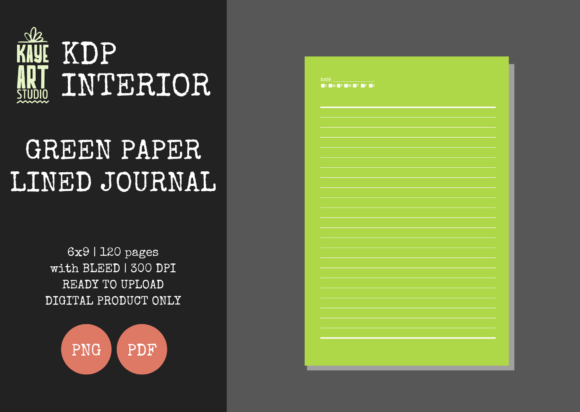
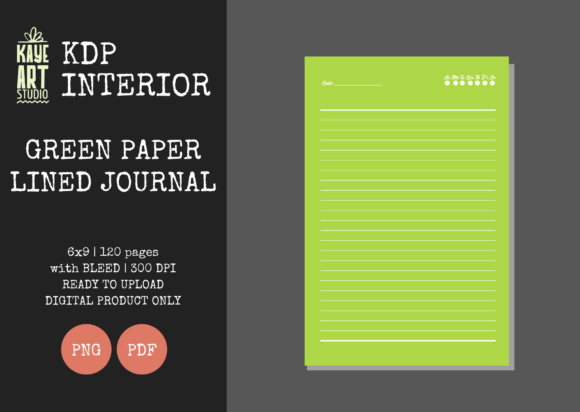
The viability of any KDP interior relies entirely on its adherence to Amazon’s printing standards. The KDP Green Paper Lined Journal 4 is engineered with specific parameters that align with current KDP requirements, reducing the risk of rejection during the upload process. The file is formatted at 300 DPI, ensuring that the green tint and line work render sharply in print rather than appearing pixelated or muddy. Resolution is particularly critical when using colored backgrounds; lower resolution files often result in banding or artifacts that degrade the perceived quality of the physical book.
This interior features a 6×9 inch trim size, which remains the industry standard for trade paperbacks and journals due to its portability and cost-efficiency. It contains 120 pages, providing substantial content value without pushing the spine width into a range that requires more complex cover calculations. Crucially, the files are configured with BLEED settings. Publishers must understand that this designation means the design extends beyond the final trim line. When uploading this interior to KDP, selecting the "Bleed" option is mandatory. Failure to toggle this setting will result in white margins appearing around the green background or, conversely, the trimming of essential lined areas. The availability of both PNG and PDF formats offers flexibility, though PDF is generally recommended for multi-page interiors to maintain consistent alignment and reduce file size overhead.
File Integrity and Workflow Integration
A significant advantage of using tested assets like the KDP Green Paper Lined Journal 4 is the reduction of pre-flight troubleshooting. The files have been validated against KDP’s automated checks, meaning the margins, safe zones, and bleed allowances are already calibrated. For high-volume publishers or those managing multiple imprints, this reliability translates directly into time savings. Instead of spending hours adjusting gutter margins or verifying color profiles, creators can move directly to cover design and metadata optimization. However, users should always perform a manual review of the digital proof before approving publication, as platform updates can occasionally alter rendering expectations.
Aesthetic Value and Audience Targeting
The primary value proposition of this interior lies in its visual differentiation. Standard lined journals are commodities; green paper journals are niche products. The specific shade used in KDP Green Paper Lined Journal 4 serves functional and psychological purposes that resonate with distinct buyer personas. From a usability standpoint, green backgrounds are frequently associated with reduced glare and eye fatigue compared to stark white paper. This makes the interior particularly suitable for audiences who journal extensively, such as students, writers, or professionals engaging in daily reflection practices.
From a marketing perspective, the color green carries semantic weight. It aligns naturally with niches involving:
- Wellness and Mental Health: Gratitude journals, mindfulness trackers, and therapy notebooks where calming aesthetics support the intended use case.
- Nature and Outdoors: Garden planners, hiking logs, camping journals, or botanical sketchbooks where the paper color reinforces the thematic content.
- Finance and Growth: Budget trackers, investment logs, or business planning journals where green symbolizes prosperity and stability.
- Eco-Conscious Themes: Sustainability trackers or zero-waste journals where the color implies environmental awareness, even if the physical paper is standard stock.
Publishers should note that the interior alone does not sell the book; it must be paired with a cover that signals the specific niche. A generic floral cover might attract one demographic, while a minimalist geometric design attracts another. The KDP Green Paper Lined Journal 4 acts as the foundational product, but the external packaging determines discoverability.
Practical Considerations for Cover Design
Because this listing is for the INTERIOR only, creators retain full responsibility for cover creation. This separation allows for maximum customization but requires careful coordination. When designing a cover for this specific interior, consider how the exterior palette interacts with the interior green tone. Opening a book to find a jarring color mismatch can lead to negative reviews regarding product cohesion. Successful publishers often sample the exact hex code or CMYK value of the interior green and incorporate it into the cover typography or background elements to create a seamless unboxing experience. Additionally, since the interior has bleed, the cover file must also be set up with bleed to ensure professional edge-to-edge printing consistency.
Strategic Implementation in Low-Content Businesses
For entrepreneurs and freelancers operating in the no and low-content space, efficiency dictates profitability. The KDP Green Paper Lined Journal 4 functions as a scalable asset within a broader portfolio strategy. Rather than creating custom interiors from scratch for every new title, publishers can utilize this template across multiple niches by simply varying the cover art and keywords. This approach maximizes return on investment for the asset purchase.
However, reliance on pre-made templates carries inherent risks. Because these files are available to multiple sellers, identical interiors exist across the marketplace. To mitigate this, successful publishers treat this journal as a base layer rather than a finished product. Consider adding value through:
- Custom Front Matter: Inserting a unique title page, copyright notice, or introductory prompt specific to your niche before the lined sections begin.
- Niche-Specific Keywords: Ensuring metadata accurately reflects the specific use case (e.g., "Garden Planning Journal" rather than just "Green Lined Notebook") to avoid competing in oversaturated general terms.
- A+ Content: Using Amazon A+ Content to showcase the interior pages visually, helping customers understand exactly what the green paper looks like in print and reducing return rates due to unmet expectations.
Quality Assessment and Limitations
While the KDP Green Paper Lined Journal 4 offers convenience, publishers must maintain realistic expectations regarding print output. Amazon KDP uses standard offset printing processes for paperback interiors. Colored backgrounds, including light green tints, can sometimes exhibit slight variations in saturation between print runs or appear lighter/darker than they do on a backlit monitor screen. This is a limitation of the printing technology, not necessarily the file itself. Professional publishers manage this by ordering physical proofs before launching marketing campaigns or running ads. Verifying that the green tone prints pleasantly and that the lines remain crisp enough for writing is a non-negotiable step in quality assurance.
Additionally, users should be aware that writing instruments interact differently with colored backgrounds. Gel pens and markers may show through more prominently on tinted paper than on white paper. While this is largely dependent on KDP’s paper stock rather than the digital file, it is worth mentioning in product descriptions to set appropriate customer expectations. Transparency regarding paper opacity helps build trust and reduces negative feedback related to bleed-through.
Determining Fit for Your Publishing Goals
The KDP Green Paper Lined Journal 4 is best suited for publishers who have already validated demand in color-differentiated niches or those looking to expand beyond basic white paper offerings without investing in custom graphic design. It serves professionals, educators, and creators who need a reliable, technically compliant foundation that allows them to focus on branding and marketing rather than file formatting.
Conversely, this asset may not be ideal for publishers targeting luxury or premium segments where bespoke, hand-drawn interiors are expected, or for those whose niches strictly require high-contrast white backgrounds for accessibility compliance. It is a tool for volume and variety, not necessarily for ultra-premium exclusivity.
Ultimately, the effectiveness of this interior depends on how it is positioned within a cohesive publishing strategy. When combined with targeted keyword research, complementary cover design, and accurate product representation, the KDP Green Paper Lined Journal 4 provides a practical pathway to diversifying a low-content catalog. Its ready-for-upload status removes technical barriers, allowing publishers to allocate resources toward the creative and analytical tasks that drive sustainable growth in the KDP ecosystem. By treating this template as one component of a larger business system rather than a standalone solution, creators can leverage its strengths while mitigating the common pitfalls of template-based publishing.