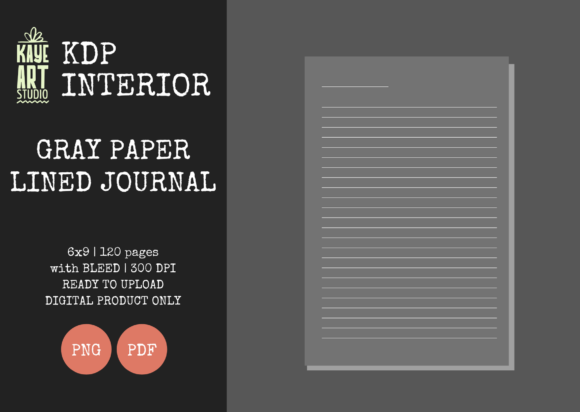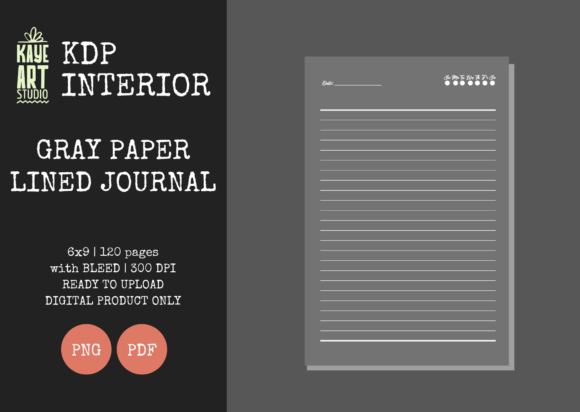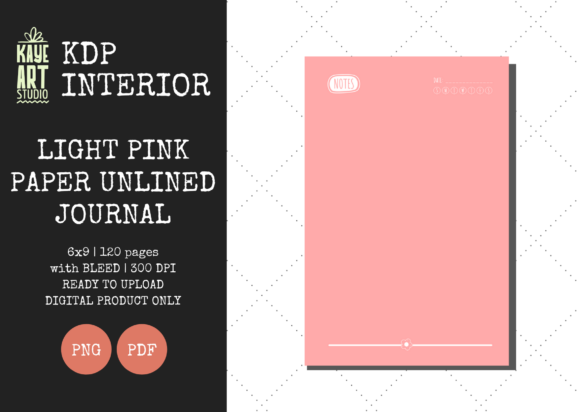
Mastering KDP Gray Paper Unlined Journals: A Complete Guide to No-Content Publishing
The world of self-publishing has evolved dramatically over the last decade, shifting from a platform solely for novelists and academics to a thriving marketplace for functional, creative, and utility-based books. At the forefront of this shift is the no-content and low-content publishing model, specifically through Amazon’s Kindle Direct Publishing (KDP). Among the various formats available to creators, the KDP Gray Paper Unlined Journal stands out as a versatile staple. Whether you are a seasoned publisher looking to expand your catalog or a beginner seeking your first sale, understanding the nuances of gray paper interiors is essential for building a sustainable business.
This guide explores the purpose, technical specifications, and strategic relevance of unlined gray paper journals in the modern KDP landscape. We will move beyond simple product descriptions to understand why this specific format matters, how it fits into current consumer habits, and how to navigate the technical requirements to ensure a professional final product.
Understanding the Appeal of Gray Paper Interiors
To succeed in KDP, one must first understand the end-user. Why would a customer choose a journal with gray paper over traditional white paper? The answer lies in functionality and aesthetics. White paper, while standard, can sometimes be harsh under bright lighting and may cause eye strain during extended writing sessions. Gray paper offers a softer contrast, reducing glare and providing a unique, premium feel that distinguishes a book from mass-market notebooks.
Furthermore, unlined pages represent pure freedom. In an era dominated by digital structure, notifications, and rigid scheduling, an unlined journal serves as a sanctuary for unstructured thought. This makes gray paper unlined journals particularly relevant for:
- Artists and Sketchers: Graphite and charcoal often appear more vibrant against a neutral gray background than on stark white.
- Mindfulness Practitioners: The muted tone supports meditation, gratitude journaling, and stream-of-consciousness writing without the pressure of "staying between the lines."
- Fountain Pen Enthusiasts: Many users report that gray paper masks ink bleed-through better than white paper, maintaining a cleaner aesthetic on the reverse side.
- Educators and Students: Ideal for brainstorming, mind mapping, and conceptual drawing where linear structure hinders creativity.
By offering a KDP Interiors Gray Paper Unlined Journal, you are not just selling blank pages; you are providing a specific sensory experience tailored to these niche audiences.
Technical Specifications: Getting It Right the First Time
One of the most common pitfalls for new KDP publishers is misunderstanding print specifications. A beautiful interior file is useless if it gets rejected during the upload process or prints incorrectly. When utilizing a pre-made 6×9 unlined journal template, precision is non-negotiable.
Trim Size and Page Count
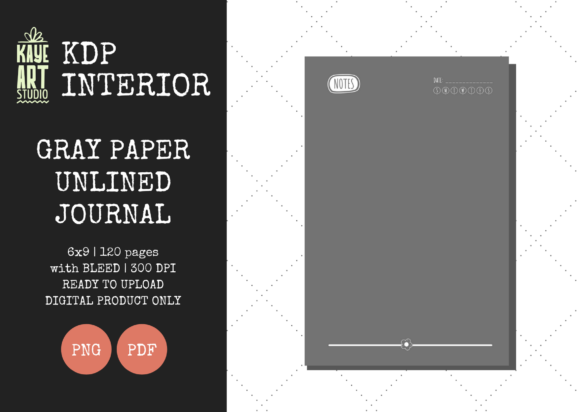
The industry standard for trade journals is 6×9 inches. This size strikes the perfect balance between portability and usable surface area. It fits comfortably in backpacks, purses, and desk drawers, making it an impulse-friendly purchase. The standard page count for these interiors is typically 120 pages. This thickness provides substantial value to the customer while keeping printing costs low enough to maintain healthy royalty margins. Deviating from these standards without market research can lead to higher production costs or a product that feels insubstantial.
The Critical Importance of Bleed Settings
If there is one technical detail you must memorize, it is the concept of BLEED. Bleed refers to printing that extends beyond the trim edge of the page. Even if your unlined journal appears to have margins, KDP requires specific bleed settings to account for slight mechanical shifts during the trimming process.
When using a high-quality 300 DPI PNG or PDF interior file designed for gray paper, you must select the "Bleed" option in the KDP dashboard during upload. Failing to do so can result in white borders appearing where they shouldn't, or content being trimmed off entirely. Always verify that your source files have been tested on KDP. Reputable interior providers design their files with the necessary safety margins and bleed extensions already integrated, but the uploader bears the final responsibility for selecting the correct setting.
Strategic Relevance in Modern Life and Business
The rise of gray paper unlined journals correlates with broader trends in wellness, education, and digital detoxification. As screen fatigue increases, consumers are actively seeking analog alternatives for processing information. This creates a sustained demand for physical notebooks that cater to mental health and creative expression.
The Role in Education and Professional Development
In educational settings, the unlined format encourages non-linear learning. While lined paper dictates transcription, unlined paper facilitates synthesis. Teachers and coaches increasingly recommend blank journals for reflective practice, allowing students and professionals to connect ideas visually rather than sequentially. By positioning your KDP business within this context, you align your products with genuine utility rather than fleeting trends.
Creativity and Mental Health
Therapists and art counselors frequently utilize unlined journals for expressive therapy. The absence of lines removes the subconscious judgment associated with handwriting neatness or staying within boundaries. Gray paper further enhances this therapeutic quality by creating a contained, safe visual space. Publishers who understand this psychological dimension can create more effective marketing copy and target keywords that reach individuals seeking tools for self-care and emotional processing.
Navigating the KDP Business Model: Interiors vs. Covers
A crucial distinction for aspiring publishers is understanding what is included in interior-only listings. When you acquire a KDP Gray Paper Unlined Journal interior pack, you are purchasing the manuscript file only. You must create your own cover.
This separation of assets is actually a significant advantage. It allows for infinite scalability. A single high-quality gray paper interior can be paired with hundreds of different covers to target diverse micro-niches. For example:
- The Minimalist Cover: Targets professionals and adults seeking a clean, sophisticated aesthetic.
- The Botanical Cover: Appeals to nature lovers and gardeners using the journal for field notes.
- The Abstract Art Cover: Attracts artists and designers looking for a sketchbook alternative.
- The Motivational Typography Cover: Resonates with the self-help and personal development audience.
This modular approach reduces production time and allows you to test market preferences rapidly. However, it also places the burden of quality cover design squarely on your shoulders. Your cover must accurately reflect the interior experience; a customer expecting structured prompts will be disappointed by unlined pages, leading to negative reviews. Transparency and accurate metadata are pillars of E-E-A-T (Experience, Expertise, Authoritativeness, and Trustworthiness) in KDP publishing.
Common Misunderstandings and Best Practices
Despite the accessibility of KDP, several misconceptions persist regarding gray paper journals. Addressing these proactively ensures a smoother publishing journey.
Misconception: Gray paper looks dirty or low quality.
Reality: High-resolution 300 DPI files render a consistent, intentional gray tone. Poor quality only occurs when publishers use low-resolution images or incorrect color profiles. Always preview your PDF before publishing to ensure the gray is uniform and professional.
Misconception: Unlined means no structure needed.< Reality: Even unlined journals benefit from subtle structure. Consider adding a title page, a "This Journal Belongs To" page, or subtle corner markers. These small additions elevate the perceived value without compromising the unlined utility.
Misconception: Any PDF will work.
Reality: File integrity matters. Ensure your interior files are flattened PDFs or high-quality PNGs at exactly 300 DPI. RGB color mode is generally preferred for KDP paperback interiors, though some creators experiment with CMYK. Testing your specific file type prevents unexpected color shifts in the printed gray tone.
Building a Sustainable No-Content Portfolio
Success in KDP is rarely about a single book; it is about building a catalog that serves real needs. The KDP Gray Paper Unlined Journal is a foundational asset in this portfolio. Its versatility allows you to pivot across niches without reinventing the wheel each time. By focusing on quality specifications—correct bleed settings, appropriate trim sizes, and high-resolution files—you establish a reputation for reliability.
Remember that the interior is merely the canvas. Your value as a publisher comes from identifying who needs that canvas and presenting it in a way that resonates with their specific lifestyle, work, or creative pursuits. Whether serving a student mapping out a thesis, an artist capturing a fleeting idea, or a professional decompressing after a long day, the unlined gray journal remains a timeless tool in an increasingly digital world.
As you embark on or continue your KDP journey, prioritize understanding over speed. Learn the technical requirements deeply. Research your audience thoroughly. Create covers that honor the interior's purpose. By adhering to these principles, you transform a simple PDF download into a meaningful product that enriches the lives of readers and builds a resilient publishing business.