KDP Orange Paper Lined Journal 4: Integrating Warm-Toned Interiors into Your Publishing Workflow
Building a sustainable no-content or low-content publishing business on Amazon KDP requires more than just uploading generic templates; it demands a strategic approach to interior design that balances aesthetic appeal with technical precision. The KDP Orange Paper Lined Journal 4 serves as a specialized asset within this ecosystem, offering a distinct alternative to the standard white paper interiors that saturate the marketplace. This specific interior file is designed for creators who understand that paper color influences user experience and perceived value. By incorporating this warm-toned lined journal into your product catalog, you are not merely adding another SKU; you are diversifying your portfolio to capture niche audiences seeking vintage, retro, or eye-comfort-focused stationery.
In the broader context of KDP publishing workflows, this asset functions as a high-efficiency production component. It eliminates the time-consuming process of sourcing, formatting, and testing custom colored backgrounds while ensuring professional consistency. For entrepreneurs and publishers managing multiple titles, the KDP Orange Paper Lined Journal 4 streamlines the creation phase, allowing you to focus resources on cover design, keyword research, and marketing strategies rather than repetitive interior formatting. Understanding where this tool fits into your operational pipeline is essential for maximizing both productivity and product quality.
Strategic Positioning in the Product Development Cycle
The decision to utilize an orange paper interior should occur during the market research and concept validation phase, well before production begins. Standard white lined journals face immense competition, making differentiation difficult without significant advertising spend. The KDP Orange Paper Lined Journal 4 addresses this by targeting specific use cases where white paper is less desirable. During your planning stage, consider how this interior aligns with seasonal trends, such as autumn-themed planners, or functional niches like reading logs for those sensitive to bright white glare. This interior is particularly effective for creative writing journals, poetry collections, and gratitude diaries where the warmer tone evokes nostalgia and comfort.
When integrating this asset into your workflow, treat it as a modular component. If you are developing a series, this interior can serve as the unifying element across various cover designs. For example, a productivity coach creating a suite of journals for clients might use the orange lined pages for reflection exercises while reserving white paper for data tracking. This deliberate segmentation enhances the user experience and justifies a higher price point. The key is to match the interior’s psychological effect with the intended purpose of the book, ensuring the product feels cohesive rather than arbitrary.
Technical Specifications and Pre-Upload Preparation
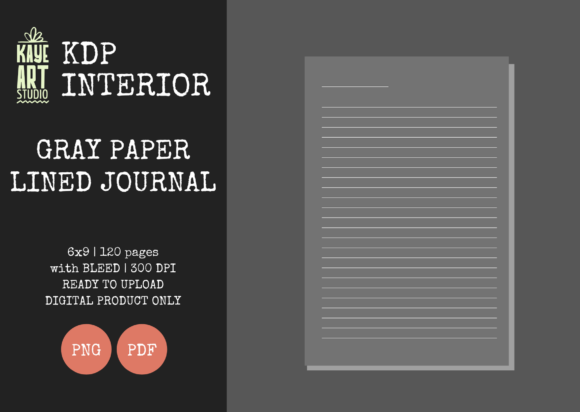
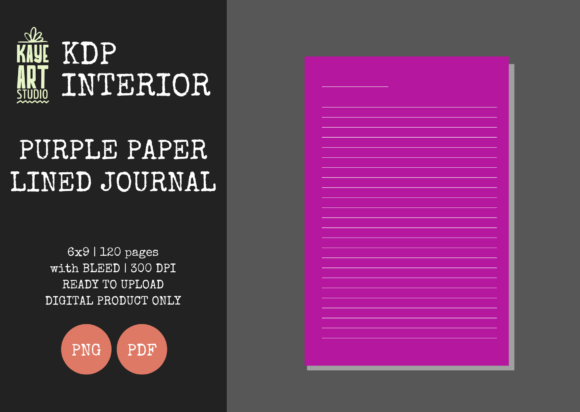
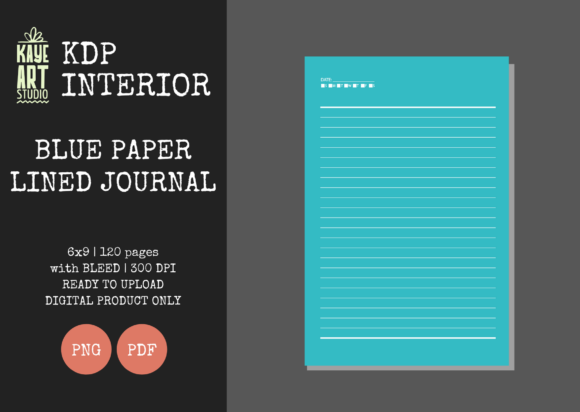
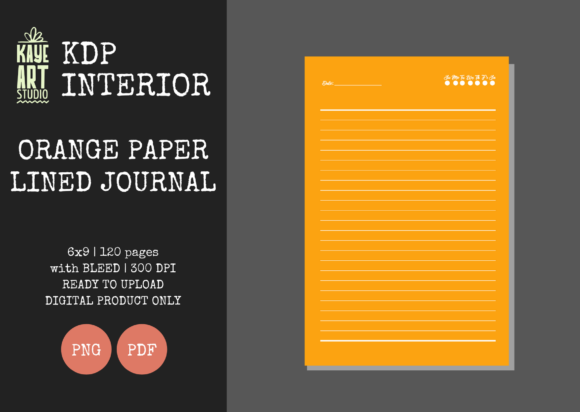
Successful implementation of the KDP Orange Paper Lined Journal 4 relies heavily on adherence to technical specifications. Misunderstanding these parameters is the most common cause of rejection or poor print quality. This asset is configured for a 6×9 inch trim size with 120 pages at 300 DPI resolution. Crucially, the files are set up with bleed settings. Before opening your publishing dashboard, you must verify that your cover file matches these exact dimensions, including the bleed allowance. A mismatch between a bleed interior and a non-bleed cover will result in alignment errors that ruin the final product.
The file package includes both PNG and PDF formats, providing flexibility depending on your preferred workflow. While PDF is generally the industry standard for KDP interiors due to its stability and smaller file size, having the PNG source allows for last-minute adjustments or verification of color accuracy in image editing software. When preparing for upload, always select the "Bleed" option in the KDP setup wizard. Failing to toggle this setting when using a bleed-enabled interior will cause the platform to crop the edges of your pages, potentially cutting into the lining or margins. This step is non-negotiable and should be added to your pre-upload checklist to prevent costly proofing delays.
Quality Control and Compatibility Checks
Even though the KDP Orange Paper Lined Journal 4 has been tested for KDP compatibility, responsible publishers perform their own quality assurance. Color rendering can vary between digital screens and physical print. Orange tones, in particular, can shift toward brown or yellow depending on the paper stock and ink density. It is advisable to order a physical proof copy before launching to verify that the line weight is visible against the colored background and that the orange hue meets your quality standards. This verification step protects your brand reputation and reduces the likelihood of negative reviews related to print quality.
Additionally, consider the interaction between this interior and your cover design. Dark or highly saturated covers often pair better with orange interiors than pastel designs, which might clash visually when the book is open. Test your cover thumbnail alongside a mockup of the interior to ensure visual harmony. This holistic view of the product ensures that the customer’s unboxing experience matches the promise made in your listing images.
Workflow Integration for Efficiency and Scale
For freelancers and small business owners, time is the most valuable resource. The KDP Orange Paper Lined Journal 4 acts as a force multiplier by removing interior creation from the critical path. Instead of spending hours adjusting opacity layers or troubleshooting margin errors in design software, you can deploy this ready-made interior and redirect that time toward high-value activities. This efficiency is particularly beneficial when testing new niches. You can rapidly prototype three or four different cover concepts using the same validated interior, allowing you to gather market data faster than competitors building from scratch.
Organization is equally important when scaling. Maintain a clear file naming convention that identifies the trim size, page count, and bleed status of this interior. When managing dozens of projects, confusing a 6×9 bleed file with a 6×9 no-bleed file can lead to catastrophic formatting errors. Create a dedicated folder structure for your KDP assets and keep the original PNG and PDF files accessible for future updates or format changes. Consistent organization prevents workflow bottlenecks and ensures that you can quickly locate the correct version of the KDP Orange Paper Lined Journal 4 whenever needed.
Enhancing User Experience Through Intentional Design
Ultimately, the success of any KDP product depends on end-user satisfaction. The orange paper in this journal is not merely decorative; it serves a functional purpose that should be communicated in your book description and A+ Content. Readers and writers often seek colored paper to reduce eye strain during extended writing sessions or to create a distinct mental separation between different types of note-taking. By articulating these benefits, you transform a simple specification into a compelling selling point.
Consider how this interior supports long-term use. Lined journals are frequently used for habit tracking, language learning, or daily journaling—activities that require consistency. The warm background can make the act of writing feel less clinical and more inviting, encouraging regular engagement. When marketing to educators or therapists, highlight this aspect of usability. The KDP Orange Paper Lined Journal 4 becomes a tool for behavioral reinforcement, adding tangible value beyond the physical pages. This user-centric perspective distinguishes professional publishers from those simply churning out low-effort content.
Cover Creation and Asset Pairing
Since this listing provides the interior only, cover creation remains your responsibility and your primary opportunity for branding. The neutral yet distinctive nature of the orange lines provides a versatile foundation for various design aesthetics. Vintage typography, botanical illustrations, and minimalist geometric patterns all complement this interior well. When designing, remember that the spine width must be calculated based on the 120-page count and cream or white paper selection (verify current KDP calculator specs as paper thickness can update). Accurate spine calculation is vital for a professional finish.
Furthermore, leverage the interior as a cross-selling mechanism. If you have other journals in your catalog with matching covers but different interiors (e.g., dot grid or blank), link them in your author central profile or series metadata. Customers who appreciate the orange lined version may be interested in complementary formats for different tasks. This interconnected approach builds a loyal customer base and increases the lifetime value of each visitor to your product page. The KDP Orange Paper Lined Journal 4 is not an isolated product; it is a node in a larger network of solutions you provide to your audience.
Long-Term Maintenance and Portfolio Management
Integrating this asset is not a one-time event but part of ongoing portfolio management. Monitor sales data and customer feedback specifically related to this interior variant. If certain cover styles perform exceptionally well with the orange paper, analyze why and replicate that success. Conversely, if returns or complaints arise regarding readability or color intensity, be prepared to adjust your marketing messaging or discontinue underperforming variations. Agility in responding to real-world performance data is what separates sustainable businesses from fleeting trends.
Finally, stay informed about KDP’s evolving printing capabilities and guidelines. While the KDP Orange Paper Lined Journal 4 is currently optimized for standard distribution, platform requirements can change. Regularly reviewing your master files against updated KDP specifications ensures your backlist remains active and compliant. By treating this interior as a living component of your business infrastructure rather than a static file, you maintain operational excellence and continue to deliver products that resonate with your target demographic. Practical execution, combined with strategic foresight, turns a simple lined journal into a reliable revenue stream and a valued resource for your customers.