KDP Black Paper Unlined Journal: Streamlining Interior Creation for Low Content Publishers
For self-publishers and entrepreneurs operating within the Amazon KDP ecosystem, efficiency in asset creation is just as critical as niche research. The KDP Black Paper Unlined Journal serves as a foundational interior template designed to eliminate technical friction during the publishing workflow. Rather than spending hours configuring margins, bleed settings, and resolution standards from scratch, this pre-formatted 6×9 inch resource allows creators to focus on cover design and marketing strategy. It functions as a reliable baseline component in a broader low-content or no-content business model, ensuring that the physical product meets professional printing standards without requiring advanced graphic design intervention.
Technical Specifications and Workflow Integration
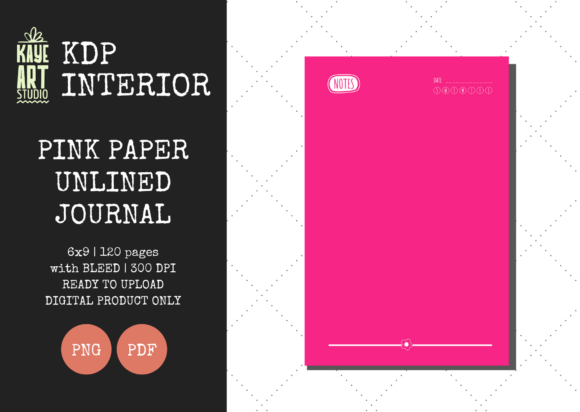
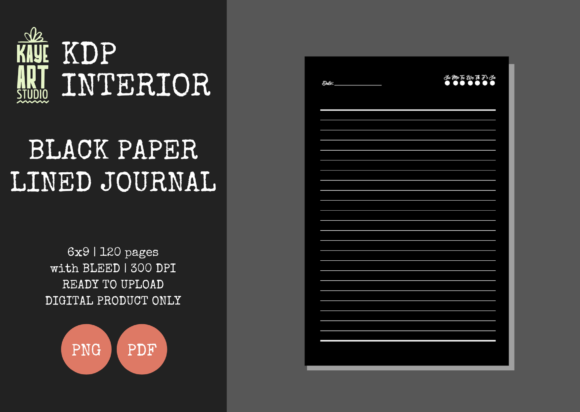
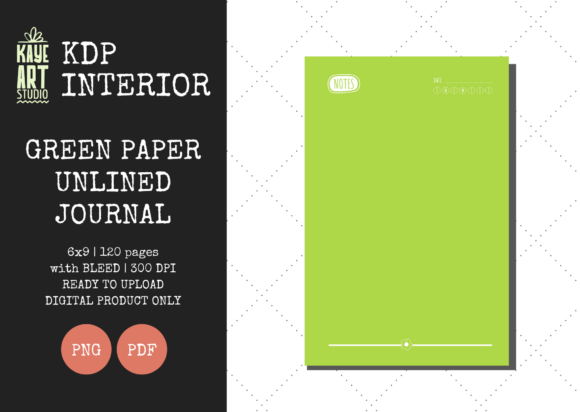
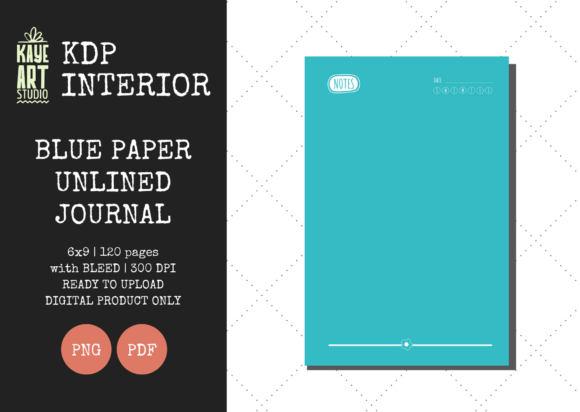
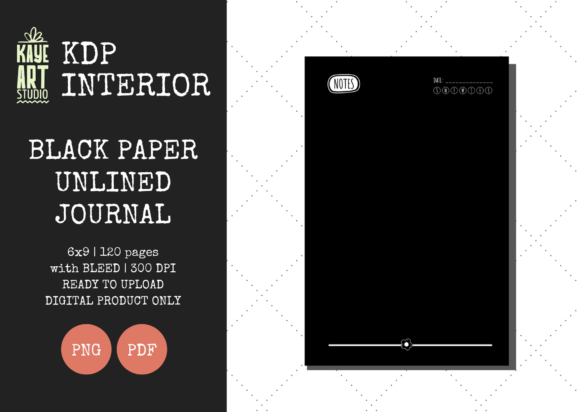
Understanding the precise technical parameters of this interior is essential for seamless integration into your publishing pipeline. This specific KDP Interiors Black Paper Unlined Journal is engineered with a 6×9 inch trim size, which remains one of the most versatile and commercially viable formats for journals, sketchbooks, and creative notebooks. The file includes 120 pages formatted at 300 DPI, ensuring crisp edges and consistent ink density when printed on demand. High resolution is non-negotiable for black paper interiors; lower resolutions can result in pixelation or banding that becomes glaringly obvious against a dark background.
The asset is provided in both PNG and PDF formats, offering flexibility depending on your preferred software environment. While PDF is generally the industry standard for direct upload to KDP, having a high-resolution PNG version allows for easier manipulation if you need to composite additional elements or verify page alignment in raster-based editing software before finalizing your manuscript. Both file types have been tested specifically for KDP compatibility, reducing the risk of rejection during the automated review process.
A critical operational detail involves the bleed configuration. This interior is designed with bleed settings active. When uploading your manuscript to KDP, you must explicitly select the "BLEED" option in the print options menu. Failing to toggle this setting will cause the system to apply safe zone margins incorrectly, potentially resulting in white borders appearing where the black ink should extend to the edge of the page. Integrating this check into your standard operating procedure prevents costly reprints and delays.
Strategic Applications Across Creative and Professional Niches
The utility of a black paper unlined journal extends far beyond simple note-taking. In a practical business context, this interior supports various specialized use cases that differentiate your product from generic white-paper alternatives. For artists and designers, black paper provides high contrast for gel pens, metallic markers, and white charcoal, making it an ideal medium for urban sketching or illustration portfolios. By positioning this interior toward creative professionals, you tap into a demographic that values specific material qualities over generic utility.
In educational and therapeutic workflows, black paper journals serve distinct functional purposes. Educators and special needs professionals often utilize dark backgrounds to reduce visual glare and sensory overload for students with dyslexia or visual processing sensitivities. Similarly, art therapists may prefer black paper for clients working through trauma, as the dark canvas can feel less intimidating than a stark white page and encourages different modes of expression. Understanding these nuanced applications allows publishers to craft metadata and descriptions that speak directly to user intent rather than relying on broad keywords.
For entrepreneurs and productivity-minded users, this unlined format supports non-linear thinking. Unlike lined journals that enforce structure, unlined black paper facilitates mind mapping, diagramming, and freeform brainstorming. Business coaches and consultants can market this as a tool for strategic planning sessions where ideas need space to expand without the constraint of horizontal rules. This positions the KDP Black Paper Unlined Journal not merely as stationery, but as a cognitive tool for problem-solving and innovation.
Integrating Interiors with Cover Design and Brand Strategy
It is important to recognize that this listing provides the interior only. Successful implementation requires pairing this template with a custom cover that accurately signals the book’s purpose to potential buyers. The cover acts as the primary conversion mechanism, while the interior dictates retention and reviews. When designing your cover, ensure the aesthetic aligns with the premium nature of black paper. Matte finishes typically pair better with black interiors than glossy ones, as they reinforce the tactile, artistic quality associated with dark paper products.
Your cover design workflow should also account for the spine width calculation based on the 120-page count. Since black paper stock can sometimes have slightly different thickness characteristics than white paper, always use KDP’s latest spine calculator immediately before finalizing your cover wrap. Even minor discrepancies in spine width can lead to misalignment that looks unprofessional in print. Treating the interior and cover as interconnected components of a single manufacturing spec ensures a cohesive final product.
Furthermore, consider how this interior fits into a larger series or brand portfolio. If you offer multiple journal types, maintaining consistency in trim size and page count across variations simplifies inventory management and cross-promotion. Customers who purchase a black paper sketchbook may later seek a dotted grid version in the same dimensions. Standardizing on this 6×9, 120-page format creates a modular system where new products can be launched rapidly using the same technical foundation.
Quality Control and Pre-Launch Verification
Even with pre-tested files, rigorous quality control remains a vital part of the publishing process. Before listing any product utilizing this KDP Black Paper Unlined Journal, order a physical proof copy. Digital previews cannot accurately represent how black ink behaves on paper substrate. You need to verify opacity, checking whether ink from heavy marker usage bleeds through to the reverse side. While 300 DPI ensures sharpness, paper absorption varies, and customer satisfaction hinges on realistic performance expectations.
During your proof review, also assess the binding integrity at the gutter. Black pages can sometimes make glue adhesion issues more visible if there are gaps. Confirm that the text-free margin near the spine provides adequate space for writing or drawing without forcing the user to break the binding. This physical validation step transforms a digital asset into a verified product, building long-term trust with your audience and protecting your publisher account health.
Additionally, test the interior against current KDP guidelines periodically. Platform specifications evolve, and what passed review six months ago may trigger flags today. Maintaining a master checklist for upload parameters—including bleed selection, trim size confirmation, and file format validation—systematizes compliance. This reduces cognitive load during launch phases and minimizes errors when scaling production across multiple titles.
Optimizing Listings for User Intent and Discovery
When marketing a product built on this interior, clarity regarding specifications prevents returns and negative feedback. Explicitly state in your description that the journal features unlined black paper, 120 pages, and a 6×9 size. Avoid vague terms like "dark notebook" or "creative journal" without qualifiers. Buyers searching for black paper have specific expectations about paper color and texture; meeting those expectations transparently improves conversion rates and customer satisfaction scores.
Consider creating supplementary content that demonstrates the interior in use. Since customers cannot physically flip through a KDP book before purchasing, A+ Content or author central posts showing sample spreads help bridge the information gap. Display examples of gel pen tests, sketching techniques, or handwriting samples on the actual black paper. This visual evidence validates the quality of the KDP Interiors Black Paper Unlined Journal and reassures buyers that the product performs as advertised.
Finally, integrate this interior into seasonal or trend-responsive workflows. Black paper journals often see increased demand during back-to-school periods, holiday gift seasons, and New Year planning cycles. Having pre-vetted interiors ready allows you to capitalize on these windows quickly. Instead of scrambling to format files during peak season, you can dedicate time to keyword research, advertising campaigns, and cover testing. This preparedness turns a simple digital asset into a scalable business advantage, enabling sustainable growth in the competitive low-content publishing landscape.