KDP Black Paper Lined Journal 3: Interior Guide
Creating a successful low-content book on Amazon requires more than just a catchy cover; the interior experience dictates whether a customer leaves a five-star review or returns the product. The KDP Black Paper Lined Journal 3 serves as a specialized foundation for publishers looking to offer something distinct from the standard white paper notebooks that saturate the marketplace. This specific interior template provides a pre-formatted, 120-page lined layout designed explicitly for dark aesthetics and high-contrast writing experiences. Understanding the nuances of this file is essential for anyone building a sustainable publishing portfolio, as it addresses specific technical requirements like bleed settings and resolution that often trip up new creators.
Defining the Product and Technical Specifications
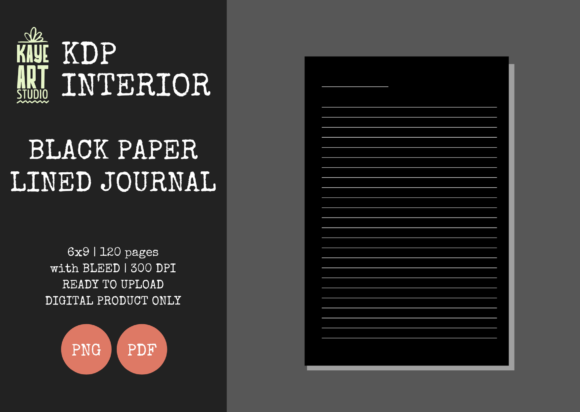
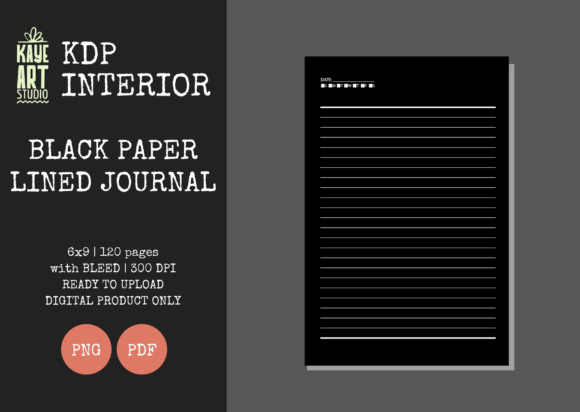
At its core, KDP Black Paper Lined Journal 3 is a digital asset package containing print-ready interiors. It is not a physical book but a set of high-resolution files formatted to meet Amazon’s strict printing guidelines. The trim size is set to the industry-standard 6x9 inches, which remains the most popular dimension for trade paperbacks and journals due to its portability and shelf presence. The file includes 120 pages of lined content rendered at 300 DPI, ensuring that lines appear crisp rather than pixelated when printed.
A critical distinction for this specific asset is the bleed setting. Unlike no-bleed interiors where margins are safe from the trim line, this journal requires you to select "BLEED" during the KDP upload process. This means the design extends to the very edge of the paper. Failing to toggle this setting will result in rejected uploads or unwanted white borders. The package typically includes both PDF and PNG formats, offering flexibility depending on your workflow. However, users must remember that this listing covers the interior only; creating a complementary cover with matching spine width and aesthetic is a separate, necessary step.
Perspectives for Beginners and Aspiring Publishers
For those just entering the Kindle Direct Publishing space, the primary value of KDP Black Paper Lined Journal 3 lies in risk mitigation and speed. New publishers often struggle with formatting software like InDesign or Affinity Publisher, spending hours trying to align margins and set up gutter spaces correctly. This pre-tested template eliminates that learning curve. Because the files have already been validated against KDP’s automated checking system, beginners can bypass the frustration of repeated upload errors.
Beyond technical ease, this interior helps novices differentiate their catalog. A common mistake for beginners is flooding their account with generic white-paper journals. By utilizing a black paper variant, new publishers can target niche keywords related to "gothic stationery," "dark academia," or "luxury noir journals" without needing advanced graphic design skills. The focus shifts from struggling with layout to learning market research and keyword optimization, which are ultimately more valuable long-term skills for a publishing business.
Evaluating Quality and Commercial Viability
Experienced publishers and small business owners evaluate this asset through a different lens: commercial viability and brand consistency. For professionals managing multiple imprints, time is inventory. Using a verified interior like KDP Black Paper Lined Journal 3 allows for rapid portfolio expansion. Instead of designing a new interior for every seasonal release, established sellers can use this consistent base to create series variations—perhaps pairing it with different cover art for Halloween, winter holidays, or alternative fashion niches.
Quality control is another priority for seasoned users. They understand that black backgrounds can sometimes reveal printing imperfections or banding if the resolution is insufficient. The 300 DPI specification here is non-negotiable for professional results. Furthermore, experienced sellers know that black paper interiors require specific cover design considerations. Text on the back cover must be legible against dark themes, and the spine calculation must be precise for 120 pages. This interior acts as a reliable constant in a variable production chain, allowing professionals to maintain quality standards while scaling output.
Creative Applications for Artists and Educators
The utility of this journal extends beyond simple note-taking, making it relevant for creators, artists, and educators who may be publishing their own resources or looking for unique tools. For artists and hobbyists interested in mixed media or gel pen work, black paper offers a distinct canvas. White ink, metallic markers, and neon gel pens pop vibrantly against dark lines, creating an aesthetic that white paper cannot replicate. Creators publishing sketchbooks or guided art journals can use this lined version as a hybrid tool, offering structure for written reflections alongside space for visual expression.
Educators and tutors might find niche applications as well. While less common for general classroom use, black paper journals serve specific pedagogical needs. They can be excellent for students with dyslexia or visual processing sensitivities who find high-contrast white paper glaring or difficult to track. The reduced glare of a dark background can make reading and writing more comfortable for neurodivergent learners. An educator creating specialized resources for these students could utilize KDP Black Paper Lined Journal 3 to produce affordable, accessible materials that aren't readily available in big-box stores.
Aligning the Asset With Your Specific Goals
Determining whether this specific interior matches your current objectives requires honest self-assessment regarding your target audience and production capabilities. If your goal is to create a minimalist productivity planner for corporate executives, this black-lined format may be too stylized and niche. However, if you are targeting the young adult demographic, fantasy writers, or the stationery enthusiast community, the aesthetic alignment is strong.
Consider your technical readiness as well. Since this is an interior-only file, do you have the capability to generate a cover that accounts for bleed? The spine width for a 120-page book is specific; using a generic cover template will lead to misalignment. If you lack cover design skills, this interior might sit unused until you bridge that gap. Conversely, if you already have a suite of dark-themed covers ready, this interior completes the product instantly.
- For Volume Publishers: Assess how quickly you can integrate this into existing workflows. Does the file naming convention match your organization system? Is the PDF optimized for fast uploading?
- For Niche Specialists: Verify that the line spacing suits your specific sub-niche. Some poetry niches prefer wider spacing, while coding logbooks might need tighter grids. Ensure the standard lining meets your audience's functional expectations.
- For Hobbyist Sellers: Consider the cost-benefit ratio. If you plan to sell fewer than ten copies, ensure the investment in premium interiors aligns with your budget versus using free alternatives.
Ultimately, KDP Black Paper Lined Journal 3 represents a balance of convenience and specialization. It removes the technical barriers of formatting a bleed-enabled dark interior while providing a distinct product variation that stands out in search results. Whether you are testing a new niche, expanding a proven brand, or creating specialized resources for a unique audience, success depends on treating this file not just as a commodity, but as a component of a larger, thoughtful publishing strategy. Always verify your cover dimensions against the 120-page count and double-check the bleed selection before hitting publish to ensure the final physical product matches the digital promise.