Genealogy Organizer Planner: Streamline Your Research
Tracing family history is a rewarding journey, but without a structured system, it can quickly become an overwhelming maze of disconnected notes, digital files, and forgotten sources. A dedicated Genealogy Organizer Planner serves as the central command center for this complex research, bridging the gap between scattered data collection and coherent narrative building. For self-publishers, researchers, and educators, having a professionally formatted interior file ready for Amazon KDP transforms this essential tool from a conceptual idea into a tangible, market-ready product or personal resource. The value lies not just in the blank spaces for writing, but in the intentional architecture designed specifically for genealogical workflows.
Technical Specifications for Professional Publishing
When evaluating or creating a Genealogy Organizer Planner for print-on-demand platforms, technical precision is non-negotiable. This specific interior file is engineered to meet rigorous publishing standards, ensuring that the final physical book looks indistinguishable from traditionally published volumes. The foundation of this quality is the 300 DPI resolution. In genealogy publishing, where users often need to write in small spaces or reference detailed charts, low-resolution files result in blurry text and pixelated lines that frustrate users and lead to negative reviews. High-definition clarity ensures every prompt, table border, and decorative element remains crisp.
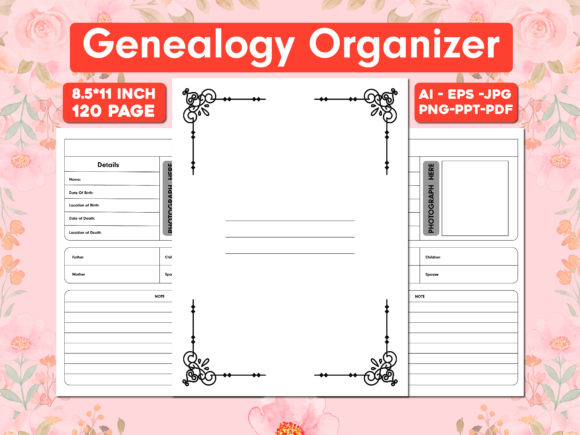
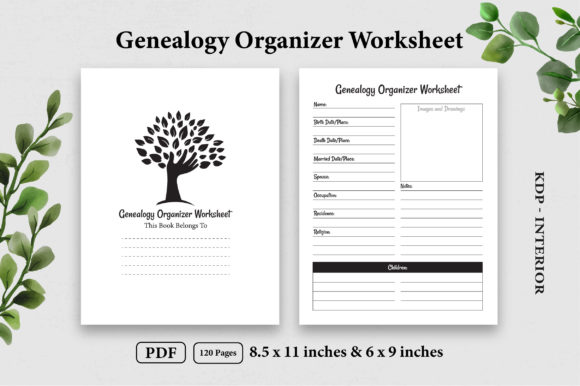
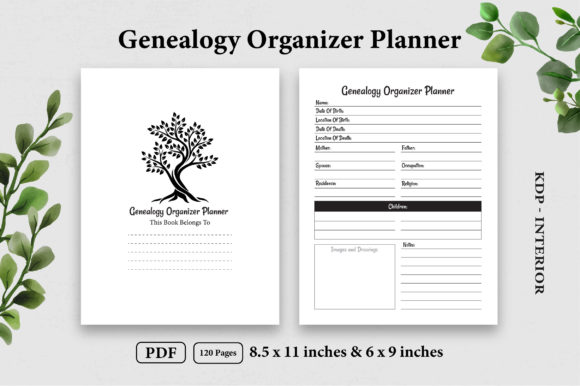
Versatility in sizing addresses different user needs within the genealogy community. This package includes both 6x9 inch and 8.5x11 inch formats. The 6x9 option offers portability for researchers visiting archives, cemeteries, or libraries, fitting easily into a bag alongside other reference materials. Conversely, the 8.5x11 format provides ample workspace for mapping out complex family trees, pasting photographs, or accommodating extensive notes during home-based research sessions. Both sizes feature interior bleed, a critical design element that allows graphics, borders, or background elements to extend to the very edge of the page without leaving unprinted white margins. This professional touch elevates the perceived value of the planner significantly.
Perhaps the most significant time-saver for publishers is the KDP-tested, ready-to-upload PDF status. Formatting errors regarding margins, gutter width, and bleed settings are the primary reasons for rejection or poor user experience on Amazon. This file has been pre-validated against current KDP specifications, eliminating the trial-and-error phase of publishing. With 120 pages and a dedicated intro page included, the structure provides substantial content without exceeding cost thresholds that might price the book out of the hobbyist market.
Strategic Applications Across User Segments
The utility of a well-designed Genealogy Organizer Planner extends far beyond individual hobbyists. Understanding these diverse applications helps creators market their books more effectively or tailor their own research systems.
- Professional Genealogists: Client work requires meticulous documentation. This planner serves as a standardized intake and progress tracking tool, allowing professionals to demonstrate organized methodology to clients while keeping case notes separate from personal research.
- Educators and Workshop Leaders: Teaching genealogy requires students to learn systematic recording habits. Instructors can use this planner as a course workbook, guiding learners through proper citation practices and relationship mapping in a structured environment rather than relying on loose worksheets.
- Content Creators and Bloggers: Family history influencers often struggle with content planning. The organizer functions as an editorial calendar for ancestry-related posts, helping creators track which ancestors have been featured, what records have been analyzed, and future research goals for audience engagement.
- Legacy Preservation Projects: Families collaborating on reunion books or heritage projects can use identical planners to standardize contributions. When multiple relatives record memories using the same prompts and layouts, compiling the final publication becomes significantly more efficient.
Design Features That Enhance Research Efficiency
A generic notebook cannot replace a specialized Genealogy Organizer Planner because lineage research demands specific data fields and relational thinking. The inclusion of a dedicated Intro Page sets the tone and provides necessary instructions, ownership details, or research methodology guidelines before the user begins recording. This front matter establishes credibility and helps users maximize the tool's effectiveness immediately.
The interior layout prioritizes function over excessive decoration. While aesthetic appeal matters, genealogists primarily need space for vital statistics, source citations, migration timelines, and DNA match tracking. The 120-page count strikes a practical balance; it is thick enough to feel substantial and hold months of active research, yet light enough to avoid high printing costs that erode profit margins for sellers or discourage buyers. The bleed-enabled design means that section dividers, corner ornaments, or sidebar references utilize the full page real estate, creating a modern, polished aesthetic that competes with major publishing houses.
Navigating Selection and Implementation
Whether you are purchasing this planner for personal use or licensing the interior for your KDP business, consider how the physical attributes align with actual usage scenarios. For those intending to sell, verify that the niche isn't oversaturated by analyzing competitor interiors. This file’s combination of dual sizes and verified bleed compliance offers a competitive advantage over amateur uploads that frequently suffer from formatting glitches. The 300 DPI specification should be highlighted in your listing description and A+ content, as experienced buyers actively filter for high-quality print standards.
For end-users selecting a planner, assess your primary research environment. If you spend hours at a desk with census records and multiple monitors, the 8.5x11 version maximizes productivity by reducing page turning and providing margin space for cross-referencing. If your research involves fieldwork, the 6x9 version prevents the friction of carrying cumbersome materials, encouraging consistent documentation even outside the home office. Remember that a planner is only effective if used consistently; choose the size that reduces friction in your specific workflow.
Implementation also involves integrating the physical planner with digital databases. Use the organizer as a processing station rather than a permanent archive. Transcribe findings from archival visits into the planner first, then migrate verified data to software like Ancestry or FamilySearch during weekly review sessions. This two-step process catches transcription errors and encourages deeper analysis of each record before it becomes just another digital entry. The structured prompts in a quality Genealogy Organizer Planner force researchers to capture metadata they might otherwise skip when typing directly into software, ultimately leading to stronger evidence chains and more reliable family trees.
Ultimately, the success of any genealogy project depends on sustainable organization. By leveraging a technically sound, purpose-built Genealogy Organizer Planner, researchers and publishers alike can focus less on formatting struggles and information chaos, and more on the meaningful work of connecting generations. The investment in proper tools pays dividends in clarity, efficiency, and the preservation of stories that might otherwise be lost to time.