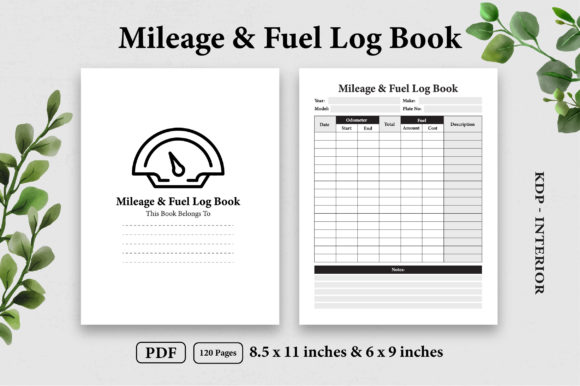
Fuel Mileage Log Book: KDP Interior Design Guide
Tracking vehicle expenses requires more than just a blank notebook; it demands a structured, reliable system that withstands daily use. For self-publishers and small business owners creating resources for drivers, the Fuel Mileage Log Book serves as a critical utility tool rather than a decorative journal. This specific KDP interior file is engineered to solve the common friction points found in generic logbooks, offering a professional-grade layout that balances data entry space with long-term durability. The design prioritizes function over form, ensuring that every page serves a distinct purpose for tax documentation, fleet management, or personal budgeting.
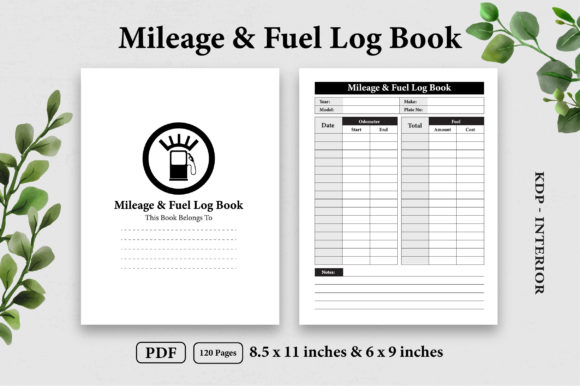
The visual personality of this interior leans heavily into utilitarian clarity. Unlike creative journals that embrace whitespace and artistic flourishes, this log book adopts a dense, information-rich aesthetic typical of professional accounting ledgers. The typography is strictly sans serif, chosen specifically for high legibility at small point sizes. When users are writing in a moving vehicle or under poor lighting conditions, the clean lines and generous x-height of the typeface reduce eye strain and prevent transcription errors. This modern typography approach signals professionalism immediately, distinguishing the product from amateurish, low-effort alternatives often found in the marketplace.
Technical Specifications for Professional Publishing
Creating a viable product on Amazon KDP requires strict adherence to printing standards, and this template eliminates the guesswork involved in formatting. The file is delivered as a ready-to-upload PDF that has been pre-tested for compliance, saving publishers hours of troubleshooting rejection notices. A standout feature is the inclusion of an intro page, which provides essential context for the user and adds perceived value to the physical book. This front matter establishes the book’s authority before the first log entry is ever made.
Resolution is non-negotiable when dealing with fine lines and small text in tabular data. This interior is rendered at 300 DPI, ensuring that grid lines remain crisp and text stays sharp even after repeated handling. Low-resolution interiors often result in fuzzy tables that look unprofessional and frustrate users trying to write neatly within confined spaces. Furthermore, the interior is designed with bleed, extending the background elements to the trim edge. This technical detail prevents unsightly white borders if the printer shifts slightly during production, resulting in a polished, bookstore-quality finish that enhances brand perception.
- Versatile Sizing: Available in both 6x9 inches for glovebox portability and 8.5x11 inches for desktop fleet management.
- Optimal Length: 120 pages provide sufficient capacity for several months of tracking without making the spine too thick for lay-flat usage.
- Print-Ready Format: Pre-flattened PDF ensures no font embedding issues or layer visibility problems during the upload process.
Strategic Applications Across Niches
While the core function remains consistent, the application of this Fuel Mileage Log Book varies significantly across different audience segments. For entrepreneurs and gig economy workers, the 6x9 format acts as a portable compliance tool. These users need a logbook that fits alongside registration papers and insurance documents. The compact size influences the design hierarchy, requiring tighter spacing and efficient use of margins to maintain usability without sacrificing data fields. In this context, the font choice supports rapid data entry, allowing drivers to record odometer readings and fuel costs in seconds.
Conversely, the 8.5x11 version targets small business owners managing multiple vehicles or content creators documenting road trips for editorial purposes. Here, the larger canvas allows for expanded columns, notes sections, and monthly summary areas. This size works exceptionally well for commercial projects where detailed expense reporting is necessary for tax deductions. Publishers targeting this demographic should emphasize the comprehensive nature of the layout in their marketing materials. The spacious design accommodates larger handwriting and allows for additional annotations, making it suitable for maintenance tracking alongside fuel consumption.
Crafters and hobbyists who restore classic cars or participate in automotive events also find value in specialized logging. For this niche, the log book becomes part of the vehicle's provenance. The clean, neutral design acts as a blank slate that doesn't clash with the aesthetic of vintage automotive culture. It functions as a historical record, where the consistency of the layout helps future owners understand the vehicle’s operational history. This demonstrates how a functional design asset can transcend its original intent to serve passionate communities.
Evaluating Readability and User Experience
When selecting or evaluating a log book interior, readability must take precedence over stylistic trends. The best fonts for this category are those that disappear, allowing the data to stand out. Script fonts or elaborate display fonts have no place in a mileage tracker; they introduce cognitive load and increase the likelihood of recording errors. The sans serif typeface used in this interior maintains a consistent stroke width, which is crucial for distinguishing between similar characters like '0' and 'O' or '1' and 'l'. This attention to typographic detail directly impacts the user's trust in the product.
Visual hierarchy guides the user through the logging process intuitively. Header rows should be distinct but not overpowering, using weight or subtle shading rather than excessive boldness that consumes ink and distracts from handwritten entries. The alignment of columns facilitates vertical scanning, enabling users to quickly audit previous entries or calculate totals. Publishers should test the interior by printing sample pages and writing in them with various pen types. If the paper texture or line weight makes standard ballpoint pens bleed or skip, the design fails regardless of its digital appearance. This practical testing phase is essential for maintaining high ratings and positive reviews.
Consistency across the 120 pages reinforces habit formation. Users should never have to reorient themselves when turning a page. The repeating structure reduces mental fatigue, which is particularly important for commercial drivers logging multiple stops per day. This reliability builds brand recognition; customers begin to associate your publishing imprint with dependable, well-thought-out tools. Over time, this consistency translates into repeat purchases as users finish one volume and immediately seek the next edition from the same creator.
Commercial Viability and Licensing Considerations
For marketers and publishers building a catalog of low-content books, understanding the commercial rights associated with design assets is paramount. Using a premium font or licensed template requires verification that commercial distribution is permitted. This Fuel Mileage Log Book interior is designed for KDP publication, but creators should always review the specific license terms regarding modifications and redistribution. Reselling the raw file is typically prohibited, while selling the compiled, printed book is the intended use case. Respecting these boundaries protects your business from legal complications and supports the designers who create these foundational assets.
Differentiation in a saturated market comes from how you package and position the interior. While the template provides the structure, your cover design, title optimization, and description copy determine discoverability. Pairing this functional interior with a cover that clearly communicates its specific use case—such as "IRS Compliant Mileage Tracker" or "Fleet Maintenance Log"—aligns customer expectations with the product reality. Avoid generic titles that fail to capture search intent. The interior’s quality supports higher price points, but only if the external presentation matches the internal professionalism.
Ultimately, the success of a Fuel Mileage Log Book lies in its ability to solve a boring problem efficiently. It does not need to be exciting; it needs to be invisible in its operation and robust in its construction. By focusing on high-resolution output, appropriate sizing, and legible typography, publishers can create products that genuinely assist adults in managing their finances and vehicles. This practical value is what sustains sales long after initial launch, turning a simple PDF template into a reliable revenue stream and a helpful resource for thousands of drivers.